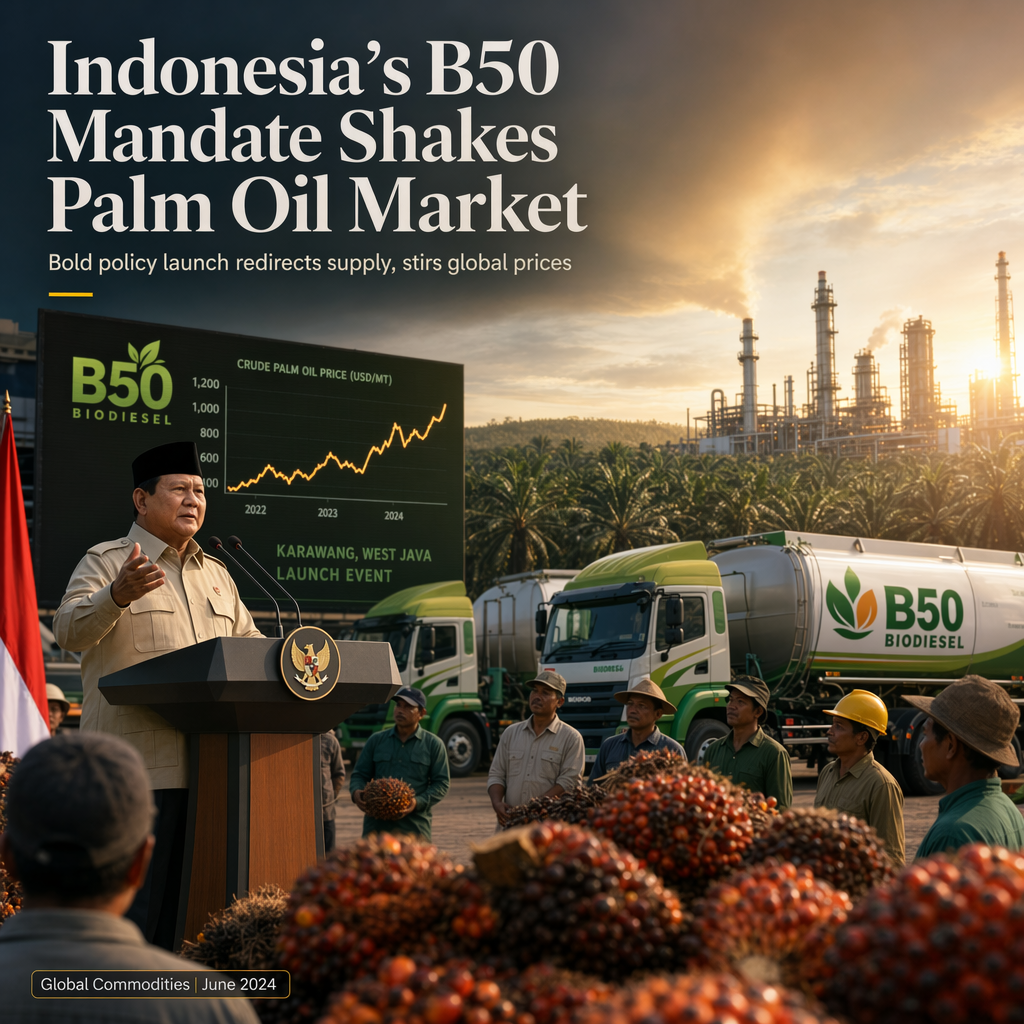
Indonesia has officially implemented its B50 biodiesel mandate, requiring all domestically sold diesel to contain 50% palm oil, up from the previous 40% under the B40 regulation. The launch event was officiated by Indonesian President Prabowo Subianto in Karawang, West Java, who emphasized that the policy aims to reduce Indonesia’s reliance on imported fossil fuels, bolster energy security, and support local farmers and the domestic palm oil industry [1].
Analysts note that the increased domestic demand for palm oil is likely to reduce Indonesia’s export volumes, which could have significant implications for the global palm oil market. The shift is expected to redirect more palm oil toward domestic use, potentially tightening supply for international buyers and supporting local palm oil prices [1]. Market observers suggest that this could lead to upward pressure on crude palm oil prices, especially if export volumes drop significantly, and recommend that traders closely monitor export statistics and domestic inventory levels [1].
Technical indicators referenced in the article suggest that palm oil prices may experience increased volatility in the coming months as international buyers adjust to lower Indonesian supply. Support for prices is anticipated around prior local lows, while resistance may build near recent highs if domestic demand continues to rise [1].
Overall, the B50 mandate is viewed as a strategic move by Indonesia to balance energy needs, support local agriculture, and influence global commodity markets. Market sentiment is described as cautiously bullish on palm oil, with trading advice centering on tracking supply-demand shifts and policy developments in Indonesia [1].
CONCLUSION
Indonesia’s B50 biodiesel mandate marks a significant policy shift with high market impact, likely tightening global palm oil supply and supporting domestic prices. Market participants are advised to monitor export and inventory data closely, as increased volatility in palm oil prices is expected in the near term.