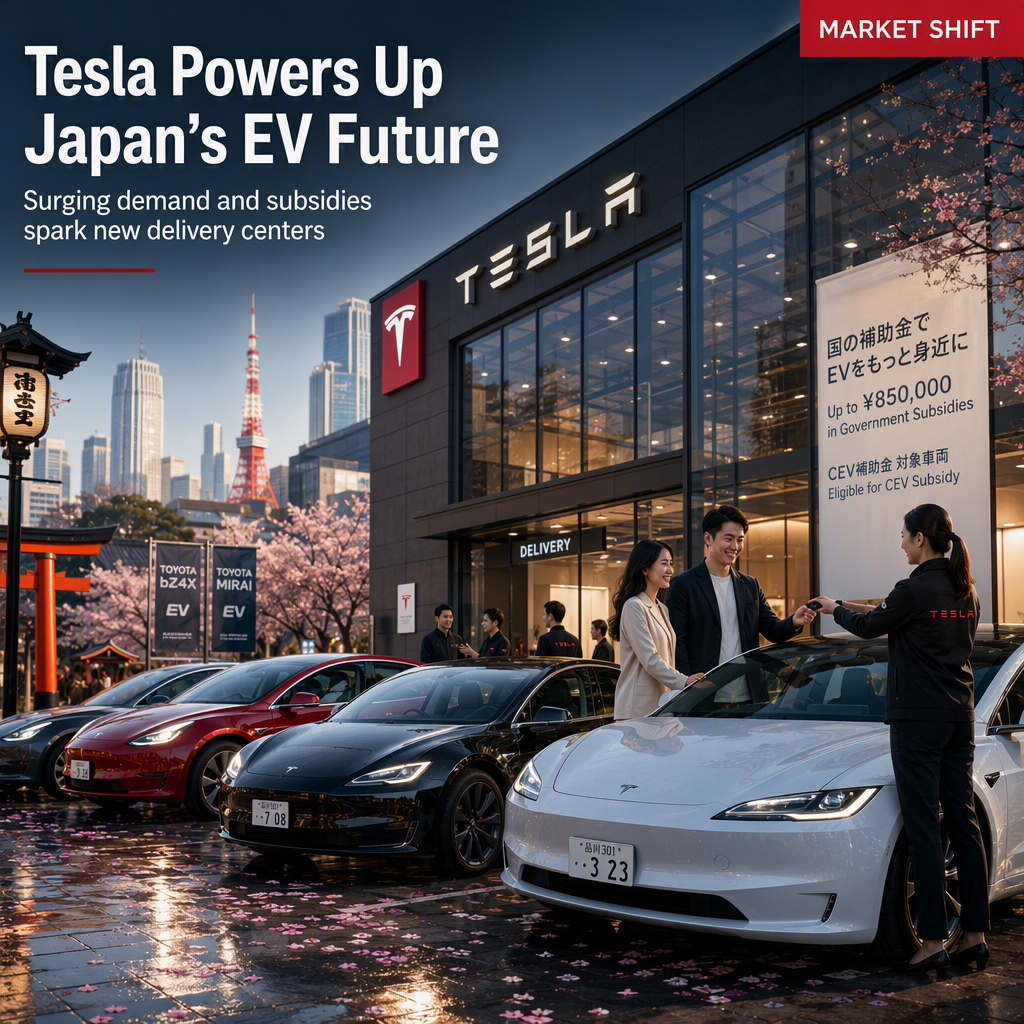
Tesla will increase its delivery locations in Japan by 60% this year to address a surge in demand that has created logistical challenges for the company [1]. The spike in Tesla shipments is attributed to government subsidies and company perks, which have driven sales to new highs in the Japanese market [1]. Unlike some other automakers, Tesla's showrooms in Japan do not deliver vehicles directly to customers, necessitating the expansion of dedicated delivery sites to manage the increased sales volume [1].
The sales surge follows recent policy changes, including Tokyo's decision to raise its electric vehicle subsidy up to $8,100, benefiting both Tesla and Toyota [1]. With these subsidies, new electric vehicles in Japan, including Tesla models, are now available for as little as $3,500, making them more affordable than many used cars [1]. This aggressive pricing strategy, combined with enhanced government incentives, has intensified competition and increased Tesla's market share in Japan [1].
Industry analysts emphasize that expanding delivery infrastructure is crucial for Tesla to maintain customer satisfaction and support future sales growth [1]. The company aims to resolve logistical bottlenecks and ensure timely vehicle handovers, especially as Japanese automakers like Toyota adapt to evolving policy dynamics and a weak yen that has boosted their profits [1]. Tesla's strategic move is seen as a response to both rising demand and broader trends in the Japanese automobile market, where government incentives are reshaping the competitive landscape for electric vehicles [1].
CONCLUSION
Tesla's decision to expand its delivery sites in Japan reflects a significant surge in demand fueled by government subsidies and competitive pricing. The move is expected to strengthen Tesla's market position and address logistical challenges, signaling a high-impact shift in Japan's electric vehicle market.