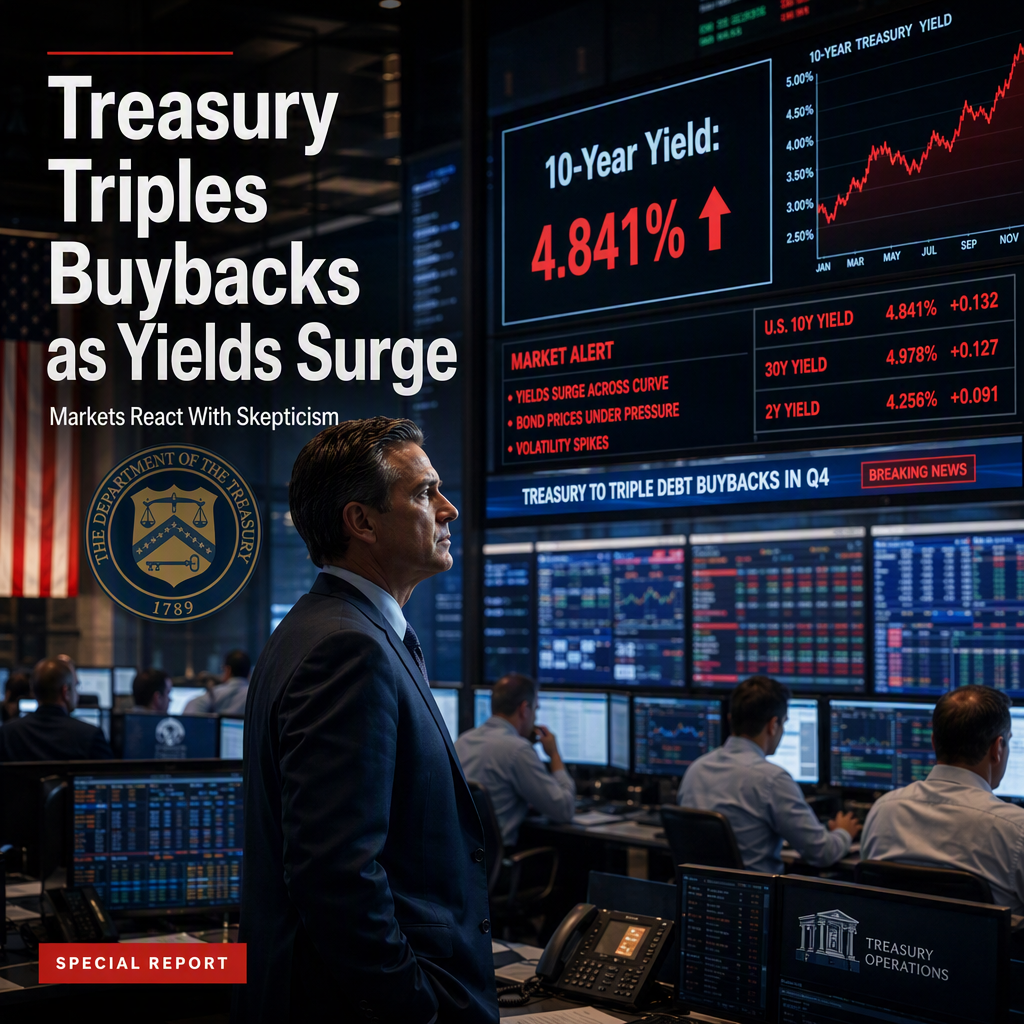
The U.S. Treasury Department announced on Wednesday that it will conduct a $6 billion buyback of longer-term government debt, tripling the normal size of such operations in an effort to maintain smooth functioning in the bond markets [1]. This move follows an earlier statement from Treasury Secretary Scott Bessent on August 19, where he indicated the department would at least double the typical buyback amount for already-issued securities [1]. The buyback specifically targets 10- and 20-year notes and is scheduled for Thursday, with the operation set to conclude at 2 p.m. ET after a 20-minute window [1].
The Treasury's action is aimed at enhancing liquidity in government debt markets, but it is also seen as an attempt to contain Treasury yields, which have climbed to levels not observed since before the 2008 global financial crisis [1]. Despite the scale of the intervention, market reaction was negative. Treasury yields continued their upward trajectory, with the benchmark 10-year note yield rising nearly 4 basis points on the day to reach 4.841% [1].
The extraordinary size of the buyback underscores the Treasury's concern over market liquidity and rising yields, but the immediate market response suggests skepticism about the effectiveness of the measure in reversing the trend of higher yields [1].
CONCLUSION
The Treasury Department's decision to triple its debt buybacks to $6 billion highlights growing concerns over market liquidity and surging yields. However, the negative market reaction, with yields continuing to rise, indicates that investors remain unconvinced that the measure will be sufficient to stabilize the bond market.