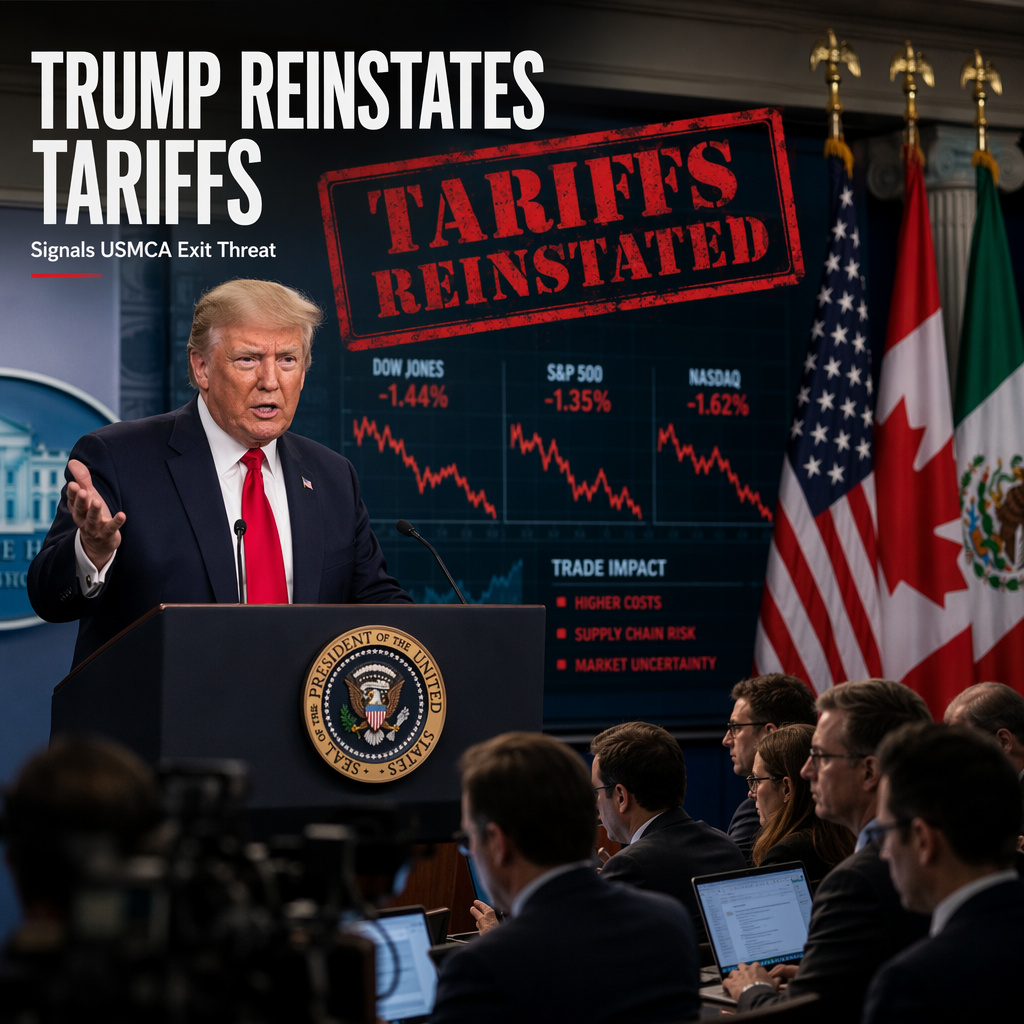
President Donald Trump announced that new U.S. tariffs are 'doing the same thing' as those previously struck down by the Supreme Court as illegal earlier in 2026, stating that he is using alternative legal avenues to achieve similar trade restrictions [1]. The Supreme Court had ruled against Trump's earlier tariff regime in a close decision, prompting the administration to seek other statutory authorities to reimpose tariffs [1].
On Friday, the Trump administration imposed tariffs ranging from 10% to 12.5% on goods from more than 80 countries, citing the failure of those trade partners to effectively prohibit the use of forced labor [1]. These new duties coincided with the expiration of Trump's previous worldwide 10% tariff, which had reached its 150-day time limit [1]. The prior 'liberation day' duties, also set at a 10% near-global baseline, were struck down by the Supreme Court on February 20, the same day the temporary tariff was announced [1].
A federal lawsuit filed four days before Trump's latest comments accuses the administration of using different statutes as pretexts to resurrect the global tariff regime that courts had previously invalidated [1]. The lawsuit argues that the new tariffs, while officially targeting forced labor practices, are 'designed to preserve substantially the same broad tariff regime that this Court and the Supreme Court have held Congress did not authorize' [1].
In addition to the tariff measures, Trump stated he would prefer the U.S. leave the USMCA trade deal with Canada and Mexico rather than renegotiate it, emphasizing his belief that the deal is more important for the U.S.'s trading partners than for the U.S. itself [1]. Trump dismissed concerns that the tariffs could harm the economy and reiterated his administration's commitment to a robust tariff policy [1].
CONCLUSION
President Trump's reimposition of tariffs following the Supreme Court's ruling signals a continued aggressive trade stance, with significant implications for global trade partners. His willingness to exit the USMCA further heightens uncertainty for North American trade relations. Market participants are likely to view these developments as increasing trade tensions and policy unpredictability.