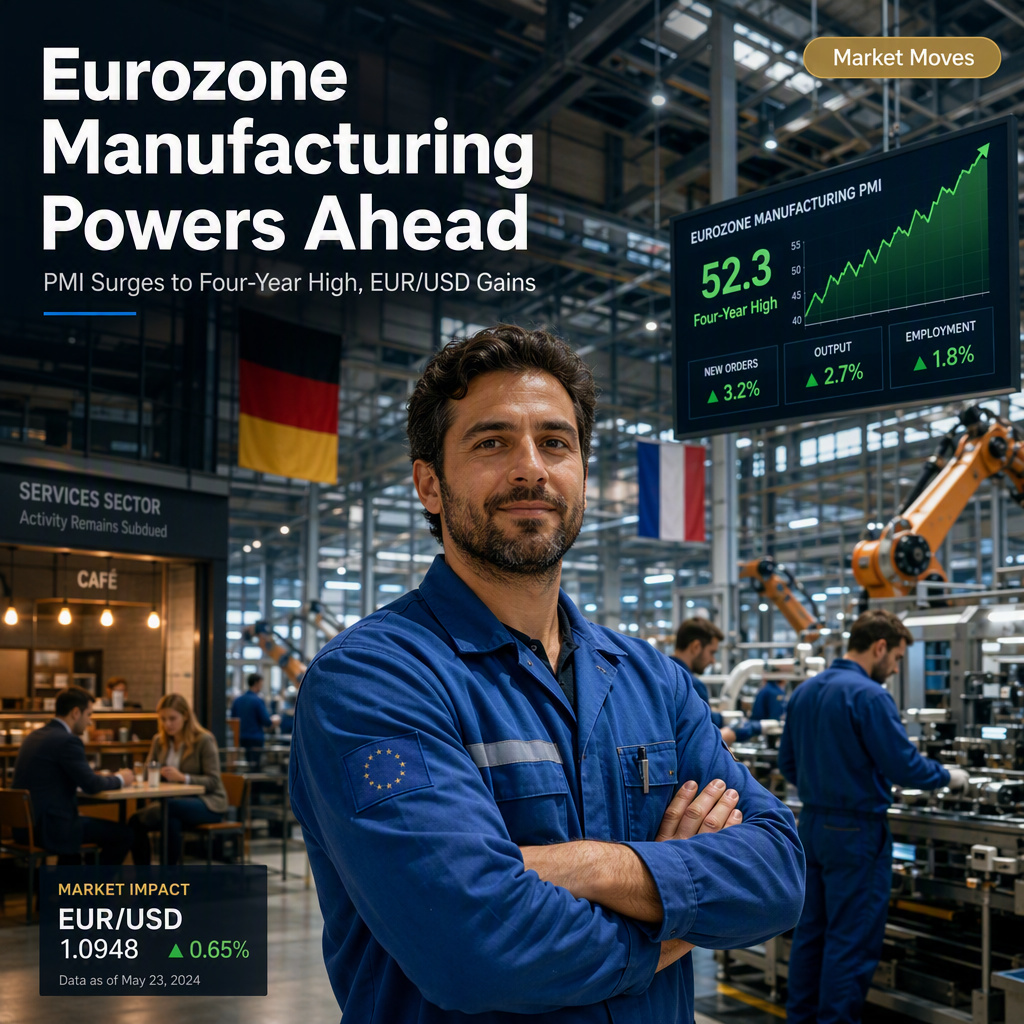
The latest Eurozone economic data show a notable divergence between manufacturing and services sectors, with the composite Purchasing Managers’ Index (PMI) edging up from 52.0 to 52.1 in August, slightly above consensus expectations and marking a nine-month high according to Brown Brothers Harriman (BBH) [1][3]. This uptick was primarily driven by manufacturing, which reached a four-year high of 52.8, bolstered by German public investment and a multi-year high of 54.1 in Germany’s industrial indicator [1]. In contrast, the services sector remained stagnant, with the sub-index for service providers falling below the 50-point mark in France and Germany, indicating contraction [1]. The composite sentiment indicator declined slightly in France (from 49.4 to 48.8) and Germany (from 51.3 to 51.0) [1].
Market reaction has been positive for the euro, with EUR/USD strengthening on the back of the stronger-than-expected PMI data and broad US dollar weakness [3]. BBH notes that swaps markets have virtually fully priced in a 25 basis point European Central Bank (ECB) rate hike in September, with a total of 60 basis points of tightening expected over the next twelve months, which would place rates near the top of the ECB’s estimated neutral range of 1.75%-3.00% [3].
The improvement in Eurozone business sentiment comes despite earlier concerns about the impact of Persian Gulf tensions and rising energy prices, which appear to be weighing less on businesses than in the spring [1]. However, the services sector’s stagnation, particularly in France and Germany, tempers the overall optimism, with the full picture pending the release of data from Spain and Italy [1].
No direct analyst opinions or forward-looking statements regarding the sustainability of the manufacturing rebound or the services sector outlook were provided in the sources, though the pricing of ECB rate hikes suggests market participants expect continued policy tightening if current trends persist [3].
Other regions, such as the UK and Canada, reported in the sources, are experiencing different dynamics and are not directly related to the Eurozone PMI event [2][4].
CONCLUSION
Eurozone manufacturing has shown robust growth, pushing the composite PMI to a nine-month high and supporting the euro against the US dollar. However, persistent weakness in the services sector, especially in France and Germany, highlights ongoing challenges. Markets are anticipating further ECB tightening, reflecting cautious optimism about the region’s economic outlook.