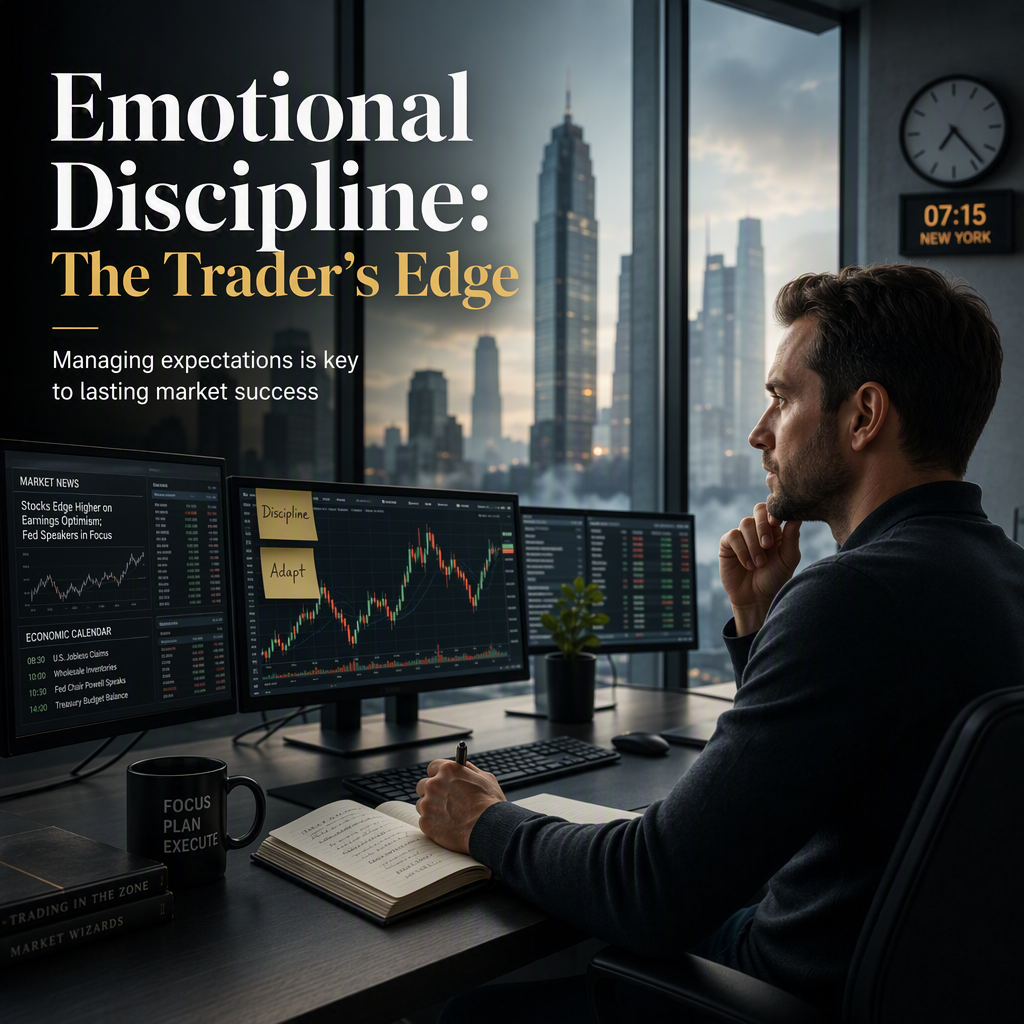
The article by Dr. Pipslow discusses the psychological challenges traders face when managing their expectations in the market. It highlights that traders often subconsciously avoid emotional pain by ignoring information that contradicts their positions, rationalizing losses, or focusing on insignificant details that support their initial ideas, even when price action signals otherwise [1]. The dangers of mismanaged expectations are emphasized, as unrealistic goals can lead to repeated disappointment, frustration, and eventually anger or resentment towards oneself or the market. This emotional cycle may result in traders giving up on trading altogether [1].
Dr. Pipslow stresses the importance of managing, rather than removing, expectations. He argues that while having expectations is natural, being stubborn in the face of contrary market signals is detrimental. Instead, traders should adapt their views based on price action and focus on controlling their own expectations rather than the uncontrollable market [1]. This approach is said to foster rational decision-making and potentially lead to more trading successes than losses [1].
The article concludes with practical advice: traders who cannot keep their emotions in check are likely to incur significant losses. Therefore, emotional discipline and realistic expectation management are presented as crucial components for long-term trading success [1].
CONCLUSION
The article underscores that managing trading expectations and emotional discipline are essential for rational decision-making and long-term success in the markets. Unrealistic expectations can lead to emotional distress and poor trading outcomes, while adapting to market signals and controlling one's mindset can improve performance. No specific market reactions or ticker symbols are mentioned.