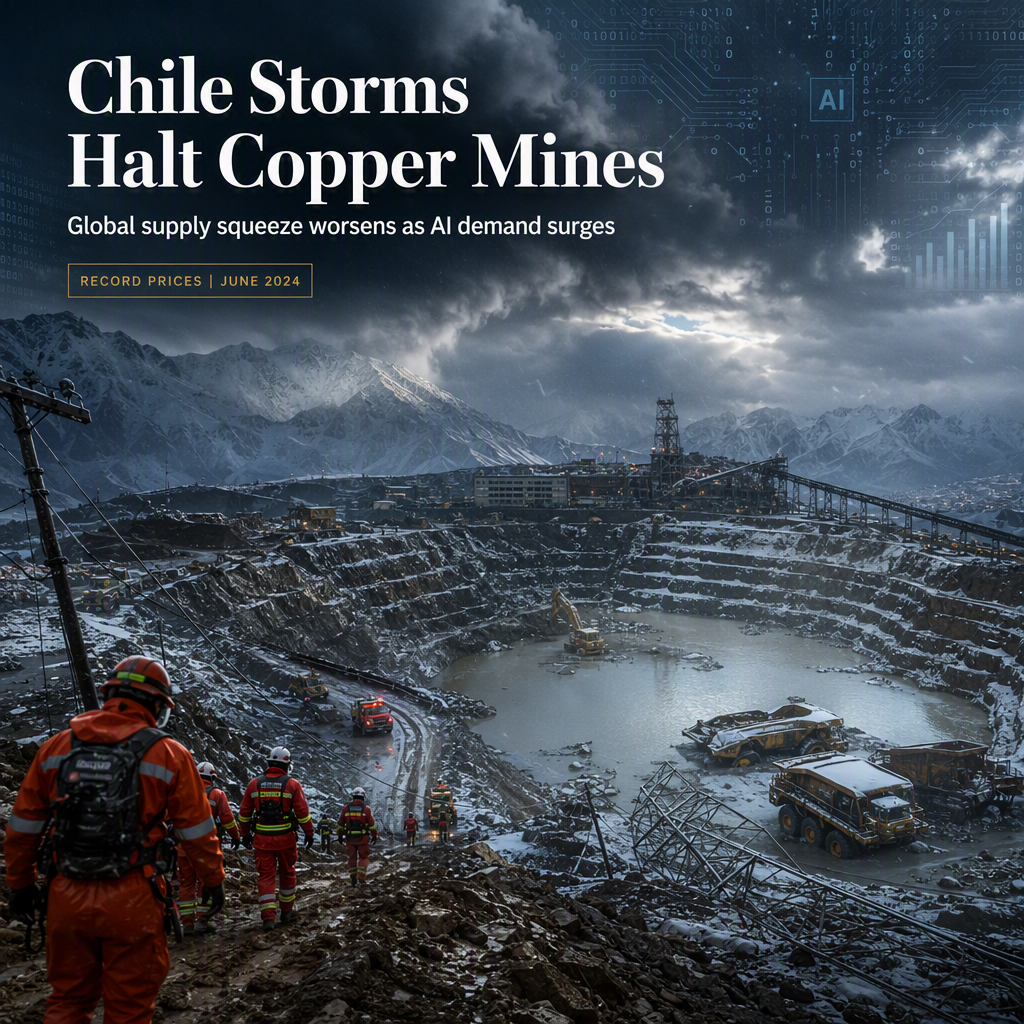
Heavy snow, rainfall, and high winds in Chile have disrupted copper mining operations over the past week, compounding an existing global supply squeeze and driving copper prices to new highs, according to strategists cited by CNBC World [1]. The extreme weather has killed 13 people and affected operations at major producers including Anglo American, Antofagasta, Lundin Mining, and state-owned Codelco [1]. Antofagasta halted mining and processing at its Los Pelambres operation, while Barrick evacuated employees due to the storms [1]. Lundin Mining reported that its Caserones mine could take two to three weeks to restart after power lines were damaged by heavy snowfall, and its Candelaria mine experienced disruptions but later returned to full capacity [1].
Copper prices surged to an all-time high of $6.70 per pound, or $13,643 per metric ton, on June 2, driven by concerns over a global supply squeeze [1]. The market is already strained by U.S. tariff expectations, tighter scrap availability in China, and surging demand for refined copper used in power grids and AI infrastructure [1]. Strategists warn that any prolonged hit to Chilean output could further increase prices, impacting the cost of building AI data centers, smartphones, electric vehicles, and industrial machinery [1].
Ewa Manthey, commodities strategist at ING, noted that while the storms alone are unlikely to upend the copper market, the disruption highlights the ongoing challenge of supply keeping pace with demand [1]. She stated, "With the market already facing supply disruptions, tariff uncertainty and tighter concentrate availability, any prolonged weather-related outages in Chile could provide additional support for prices" [1]. Natalie Scott-Gray, senior metals demand strategist at StoneX, also commented on the uncertainty in the market, though her full remarks were not included in the article [1].
The combination of weather-related supply disruptions in Chile, which accounts for more than a fifth of global copper production, and robust demand from the AI and technology sectors, has heightened market volatility and raised concerns about further price increases [1].
CONCLUSION
Deadly storms in Chile have disrupted major copper mining operations, intensifying an already tight global supply situation and pushing copper prices to record highs. With demand from AI and technology sectors surging, any prolonged outages in Chile could further support elevated prices and impact costs across multiple industries.