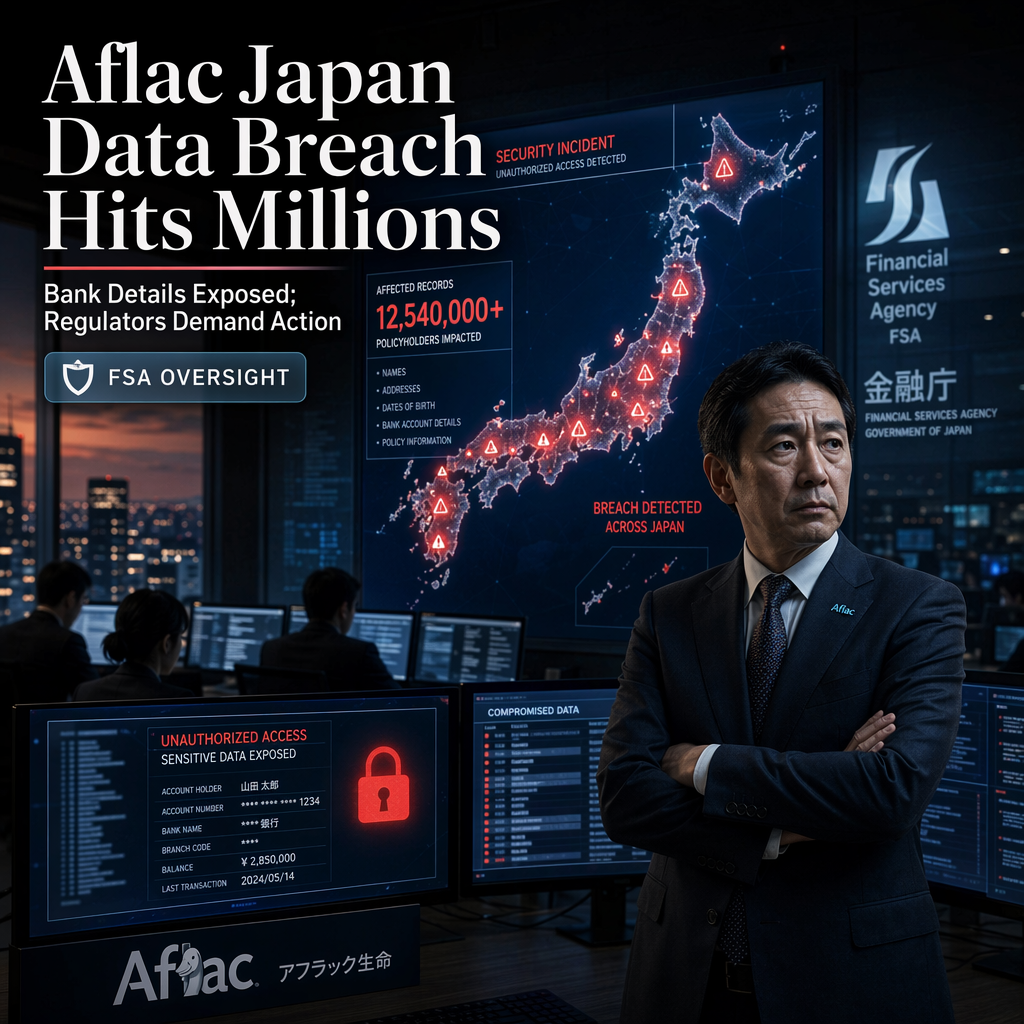
Aflac Life Insurance Japan has reported a significant data breach impacting approximately 4.38 million customers, with leaked information including names, addresses, dates of birth, policy numbers, and, for some, bank account details used for premium payments [1]. The breach has prompted Japan's Financial Services Agency (FSA) to order Aflac to investigate the cause, implement preventive measures, and notify affected customers [1]. The FSA emphasized the seriousness of the incident and stated it will continue to monitor Aflac's response to ensure policyholder information is protected [1].
Aflac, which serves 13.5 million policyholders and holds a high market share in Japan's cancer and medical insurance sectors, has apologized for the breach and is cooperating fully with authorities [1]. The company has urged customers to monitor their bank accounts for unauthorized transactions and is currently reviewing and strengthening its cybersecurity protocols [1].
While no evidence of financial losses has been reported so far, security experts cited in the article warn that the exposure of both personal and bank details could heighten the risk of identity theft and unauthorized withdrawals [1]. The incident has raised concerns about the adequacy of cybersecurity measures in the Japanese insurance sector and could have broader implications for customer trust and regulatory scrutiny [1].
CONCLUSION
Aflac Japan's data breach has exposed sensitive information of millions of customers, prompting regulatory intervention and heightened security concerns. While no financial losses have been reported yet, the incident underscores the critical importance of robust cybersecurity in the insurance industry and may impact customer confidence and regulatory oversight moving forward.