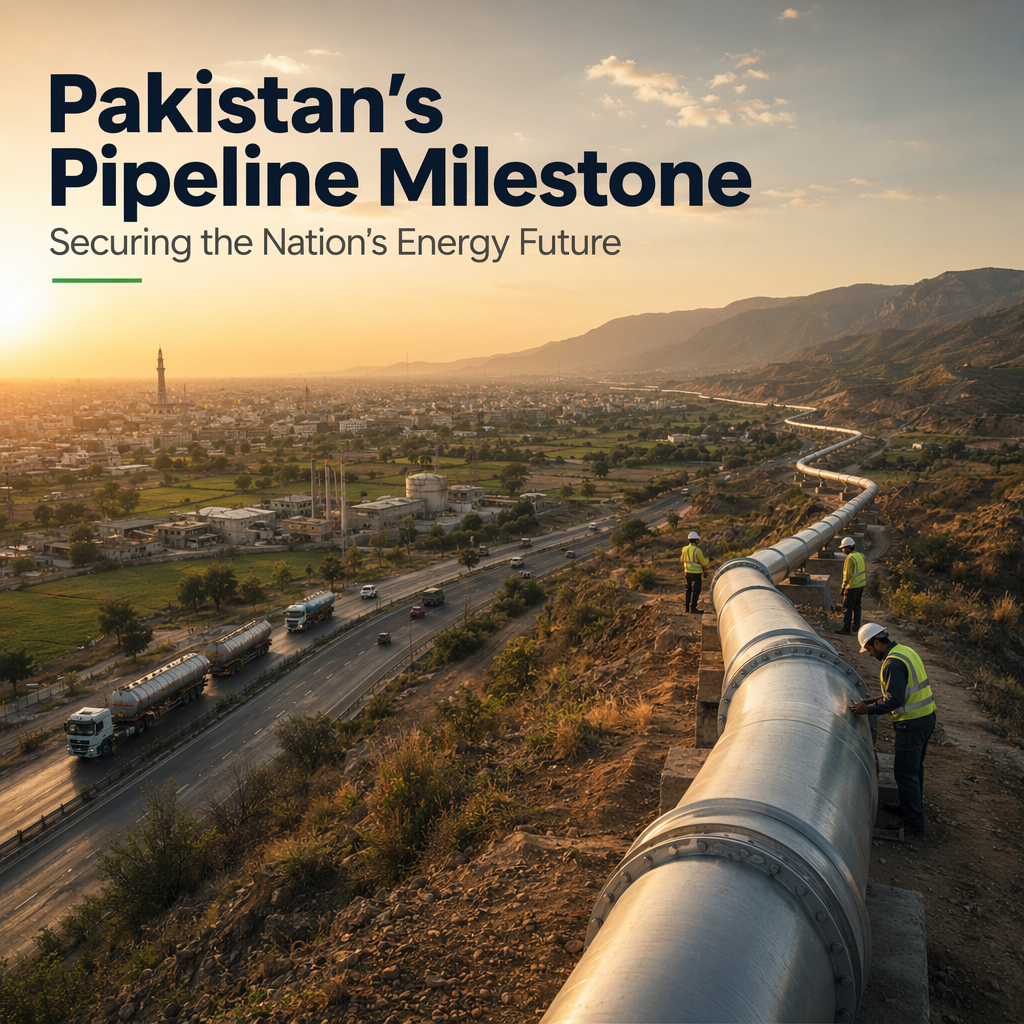
Pakistan has approved the Lahore-Peshawar oil pipeline project, completing the last segment of a 1,600-kilometer national oil pipeline network that will connect Karachi in the south to Peshawar in the north [1]. This development is expected to improve fuel logistics, reduce transport costs, and strengthen the country's energy security [1]. The new pipeline will facilitate more efficient movement of oil across Pakistan, shifting the primary mode of transport from road tankers to pipelines [1].
Industry analysts highlight that the pipeline will significantly enhance Pakistan's energy logistics by reducing reliance on road-based oil transportation, which is more vulnerable to disruptions and incurs higher insurance and operational costs [1]. The improved infrastructure is anticipated to contribute to greater energy security and could lower overall fuel prices for consumers and businesses in the long term [1].
The shift to pipeline-based transport has raised concerns among tanker drivers about potential job losses, as the traditional logistics sector may be impacted by the reduced need for road tankers [1]. A senior official involved in the project described the approval as a major milestone in modernizing Pakistan's energy supply chain, emphasizing the benefits of optimized delivery, safety, and sustainability [1].
Financial details regarding the project's cost and timeline for completion have not been disclosed [1]. The project is part of Pakistan’s broader strategy to boost energy security and efficiency amid regional uncertainties and changing supply dynamics [1].
CONCLUSION
The approval of the Lahore-Peshawar pipeline marks a significant step in Pakistan's efforts to modernize its energy infrastructure and improve supply chain efficiency. While the project is expected to enhance energy security and potentially lower fuel costs, it may also disrupt the traditional road tanker logistics sector. Financial specifics and completion timelines remain undisclosed.