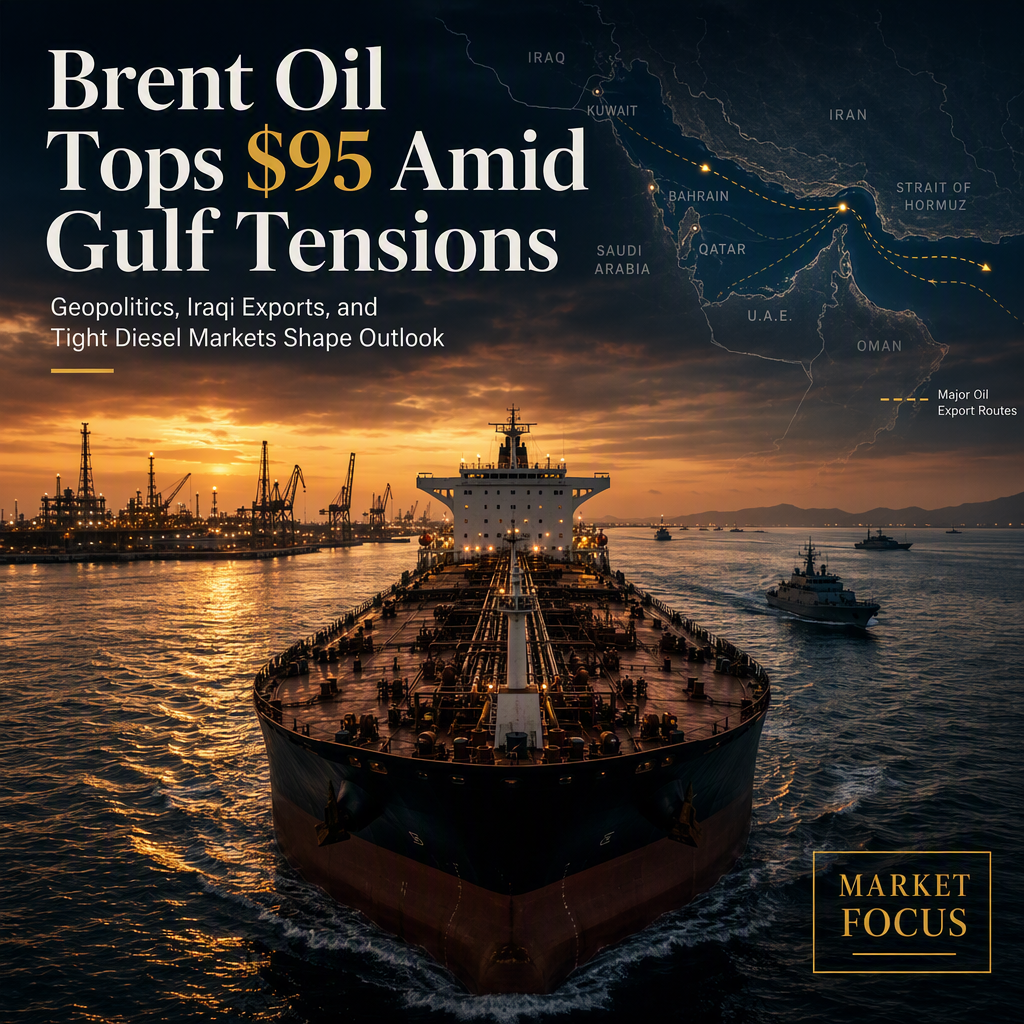
Oil prices, particularly ICE Brent, remain elevated above US$95 per barrel, supported by heightened tensions between the US and Iran, including recent missile strikes by Iran into neighboring Gulf countries [1]. This escalation has contributed to the current rally in crude prices, but ING analysts Warren Patterson and Ewa Manthey caution that the upward momentum may lose traction if shipments through the Strait of Hormuz continue uninterrupted [1].
Iraq has exported the highest amount of oil since the start of the US-Iran war in August, totaling 2.35 million barrels per day, with approximately 2.26 million barrels per day routed through southern channels that eventually pass through the Strait of Hormuz [1]. Despite expectations for a price increase, Saudi Arabia maintained its official selling price for Arab Light at a $2 per barrel discount for October loadings, signaling potentially looser market fundamentals [1].
Refined product markets remain notably tight. Insights Global data shows that inventories in the ARA region dropped by 118,000 tons week-on-week to 4.15 million tons, with naphtha, gasoil, and jet fuel leading the decline [1]. Unless Persian Gulf and Russian diesel flows recover, further tightening is expected as winter approaches. This tightness is not limited to Europe; US diesel cracks are above $100 per barrel, and retail diesel prices in the US have reached their highest levels since mid-2022 [1].
CONCLUSION
While geopolitical tensions and robust Iraqi exports are supporting elevated oil prices, the market's upward momentum may be fragile if key flows through the Strait of Hormuz remain stable. Tightness in refined products, especially diesel, is evident across both Europe and the US, suggesting continued pressure as winter nears. However, Saudi Arabia's unchanged pricing hints at less constrained fundamentals than previously anticipated.