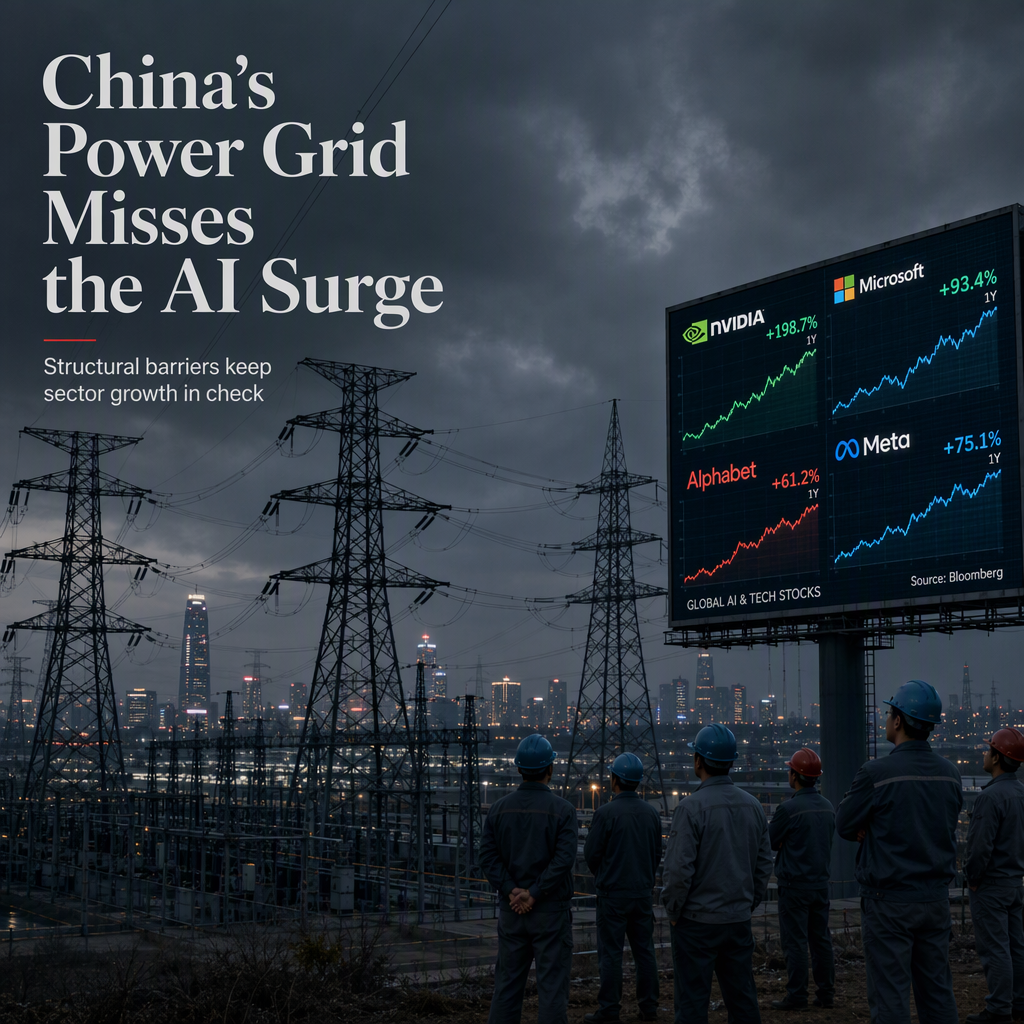
China's power infrastructure stocks have failed to capitalize on the global surge in artificial intelligence-linked investment, in stark contrast to equipment makers in the U.S. and Europe who have seen notable gains from the AI wave [1]. Despite swelling order backlogs caused by shortages in electrical infrastructure parts, Chinese manufacturers have not experienced corresponding increases in share prices [1]. The sector continues to languish, with many listed companies posting losses, highlighting a divergence between AI-driven momentum and the broader Chinese economy [1].
Market analysts attribute this underperformance to the structure of the Chinese market, where power parts suppliers are heavily reliant on contracts with government and state-owned enterprises, limiting their pricing power and profit margins even as demand rises [1]. Additionally, the lack of a broad-based market recovery and ongoing property sector issues have further dampened investor sentiment [1]. Technical analysis indicates resistance at key price levels, and there are currently no clear catalysts for a sustained rally in the sector [1].
Trading advice remains cautious, with most analysts recommending investors wait for signs of improved profitability or a diversification of customer bases before taking positions in these stocks [1]. The sector also faces increased competition from international players, which has further dampened expectations [1]. Market sentiment remains muted, with sovereign wealth funds and other institutional investors avoiding China due to broader economic concerns [1].
In summary, despite the global AI boom and increased investment, China's power infrastructure stocks have not benefitted with higher share prices, reflecting structural challenges and ongoing market skepticism [1].
CONCLUSION
China's power infrastructure stocks have not shared in the AI-driven equity gains seen in other regions, due to structural limitations and weak investor sentiment. Analysts remain cautious, advising investors to wait for signs of improved profitability or market diversification before entering the sector. The market outlook remains muted amid ongoing economic challenges.