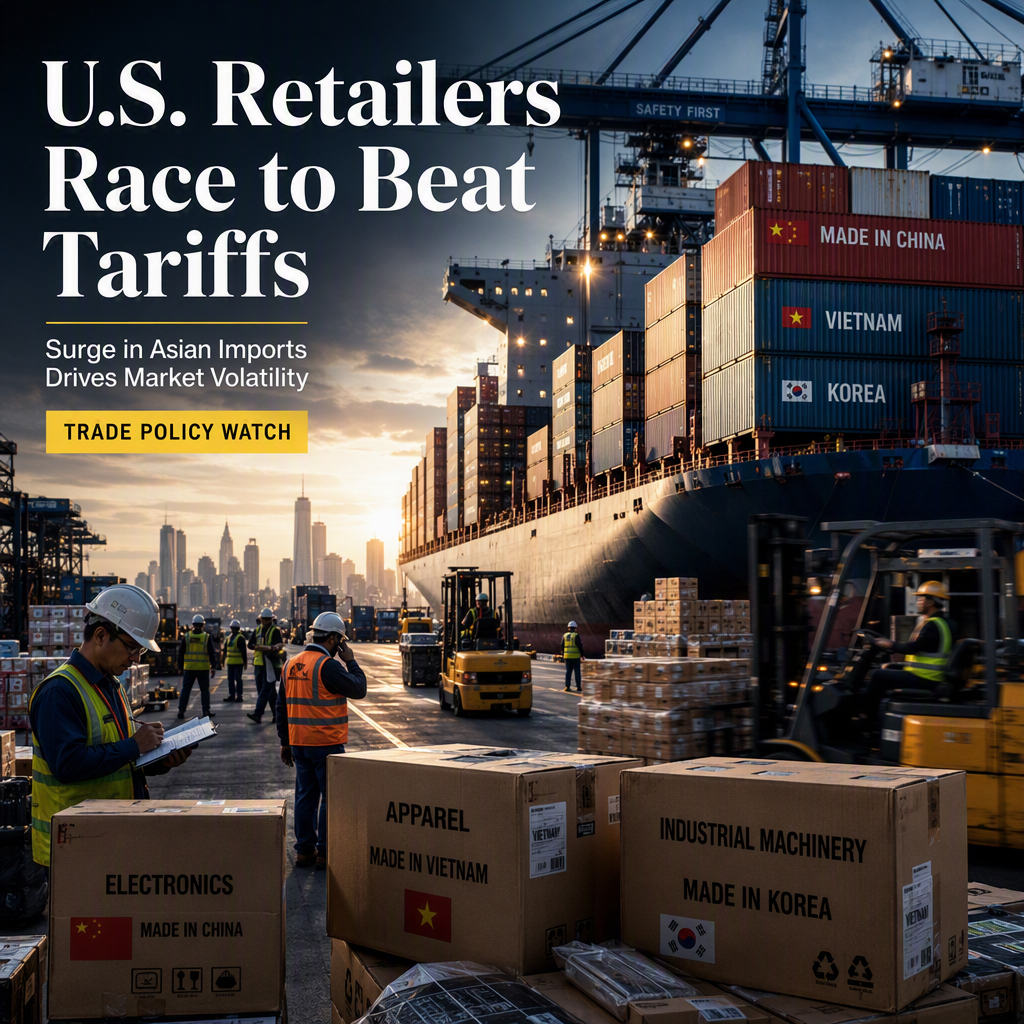
U.S. imports of goods from Asian countries increased in June compared to the previous year, as businesses rushed to bring in products before new tariffs were implemented. This surge was driven by retailers stocking up ahead of a July tariff increase, following the expiration of a flat 10% levy on all imports on July 24. In response, President Trump imposed tariffs ranging from 10% to 12.5% on 60 trading partners last month [1].
The anticipation of higher tariffs led U.S. companies to boost imports from Asia in the first half of the year, aiming to avoid increased costs once the new tariffs took effect. Market participants observed heightened volatility in trade volumes, with importers front-loading shipments to mitigate the impact of future tariff hikes [1].
Data for June indicated notable gains in imports from key Asian economies such as China, Vietnam, and South Korea. The increase was especially pronounced in consumer electronics, apparel, and machinery—sectors most sensitive to tariff changes. An executive at a major Hong Kong-based freight forwarder noted a significant uptick in orders from U.S. clients in the weeks leading up to the July deadline, citing concerns about the possibility of even higher tariffs later in the year [1].
Analysts expect import activity to decline in the coming months as the higher tariffs take effect and existing inventories are depleted. However, ongoing uncertainty regarding future trade policy continues to influence import decisions and market sentiment for the remainder of the year [1].
CONCLUSION
U.S. importers accelerated purchases from Asia ahead of new tariffs, resulting in a temporary surge in trade volumes and increased market volatility. Looking forward, analysts anticipate a slowdown in imports as tariffs bite and inventories are drawn down, with ongoing policy uncertainty likely to shape future market dynamics.