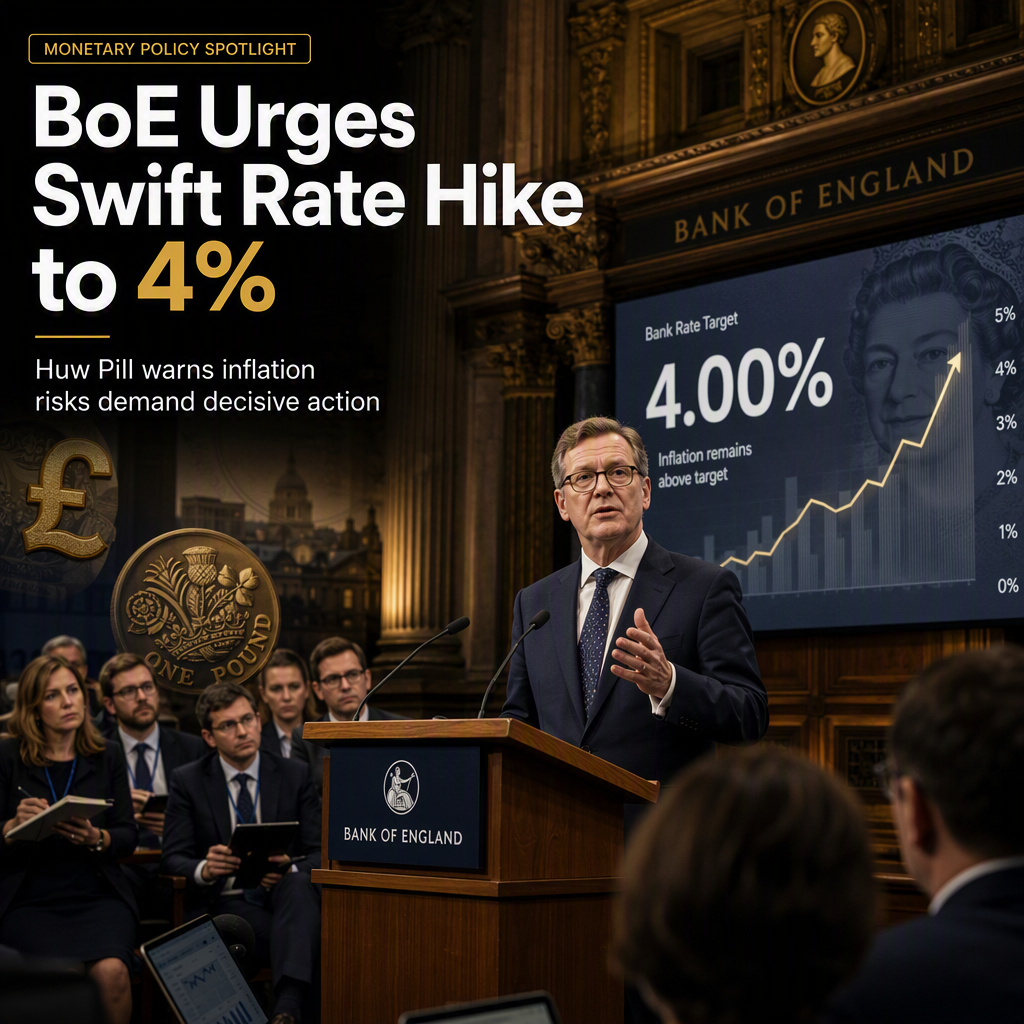
Bank of England (BoE) Chief Economist Huw Pill has reiterated his support for raising the Bank Rate to 4.00%, emphasizing the need for decisive action to prevent inflation from becoming entrenched in the UK economy. Pill argued that policymakers should not delay monetary tightening while waiting for uncertainties related to the Middle East conflict and energy prices to resolve, warning that such a wait-and-see approach could leave policy 'behind the curve' and allow higher energy costs to feed into wages and domestic prices [1].
Pill stated, 'My own response has pointed to a need to raise Bank Rate to 4%,' but clarified that this does not signal a period of prolonged aggressive rate hikes. He suggested that a prompt increase could help head off 'potential insidious catch-up dynamics' in inflation, and that clear, decisive policy action and communication would help steer markets and reduce uncertainty [1].
He also expressed skepticism that current labor market slack would prevent second-round effects from higher inflation, noting that there are reasons to believe these effects could be stronger now than in previous periods of inflation targeting. Pill further commented that the Iran war has not de-anchored longer-term inflation expectations, but cautioned against relying on extreme 'what-if' scenarios in the Monetary Policy Committee's (MPC) analysis [1].
While no immediate market reaction or analyst opinions were cited, Pill's remarks underscore the BoE's focus on preemptive action to maintain price stability and the potential for a rate hike to support the Pound Sterling by making UK assets more attractive to investors [1].
CONCLUSION
BoE Chief Economist Huw Pill's comments reinforce the central bank's readiness to raise rates to 4% in response to persistent inflation risks. His emphasis on prompt and clear policy action suggests the BoE is prioritizing inflation containment over waiting for external uncertainties to resolve. The market takeaway is a heightened expectation of near-term monetary tightening.