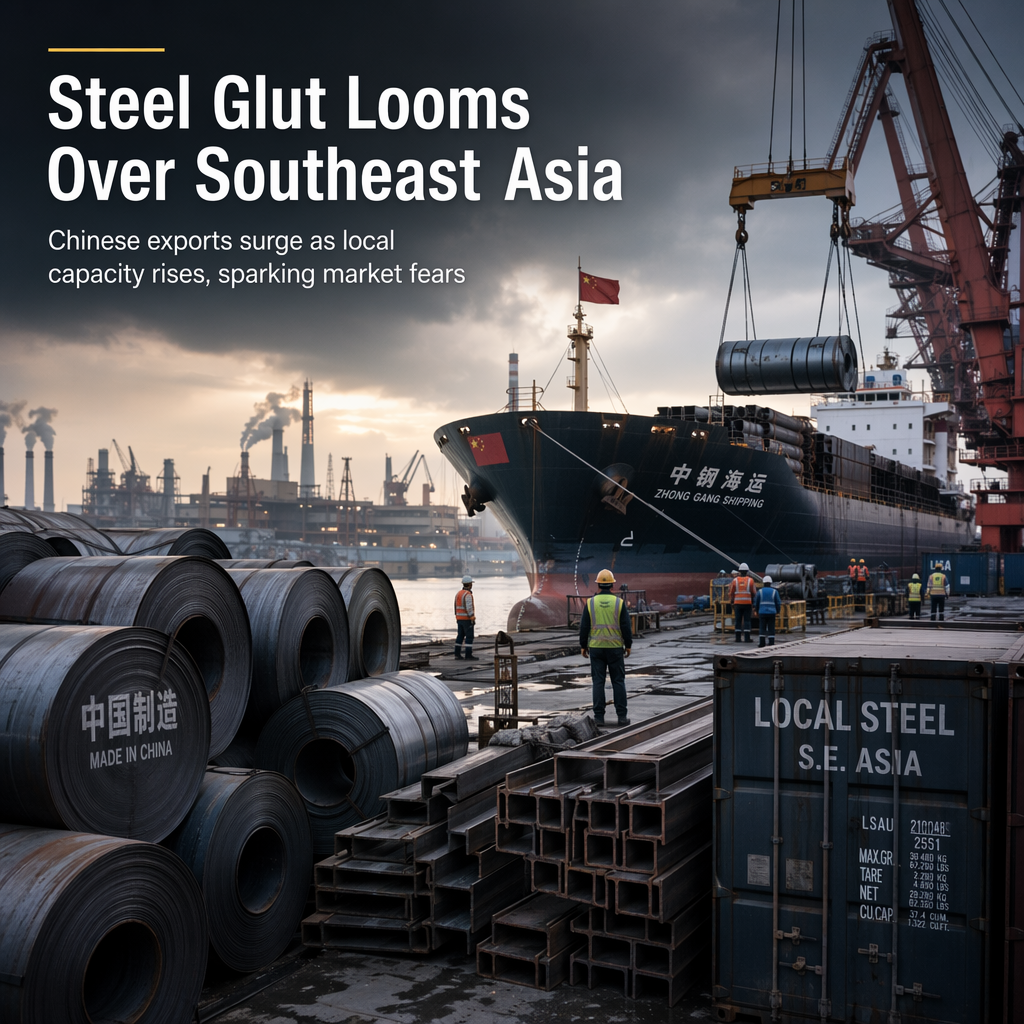
The World Steel Association's Director General, Edwin Basson, has issued a warning regarding the growing risk of a steel supply glut in Southeast Asia, citing a combination of increased Chinese steel exports and expanding domestic production within the region [1]. Basson highlighted that Chinese steelmakers, including Baosteel's Shanghai steelworks, are ramping up exports of cheap steel to Southeast Asia as Western tariffs and the war in Iran disrupt traditional trade flows [1]. This influx is compounded by local producers who are simultaneously increasing their own capacity in anticipation of higher domestic demand, raising the potential for significant market imbalance [1].
Basson stated, 'The risk of a capacity glut is real,' and described Southeast Asia as 'becoming a dumping ground for excess Chinese steel' [1]. Industry analysts referenced in the article are monitoring price levels closely, warning that the increased supply could push regional steel prices below key support levels observed over the past year [1]. Technical indicators suggest that if the glut materializes, prices could break below historical resistance points, intensifying pressure on local steelmakers' profitability [1].
Market sentiment is described as increasingly defensive, with Basson advising participants to hedge against further price declines and to exercise caution regarding new production investments until supply-demand dynamics stabilize [1]. He also suggested that regional governments may need to consider policy measures to mitigate destabilizing effects on their domestic steel industries [1].
No specific figures, percentages, or company ticker symbols were provided in the article. The overall tone from both industry analysts and the Worldsteel chief is one of caution, with a clear warning of potential negative impacts on the Southeast Asian steel market if current trends persist [1].
CONCLUSION
The warning from Worldsteel's chief underscores significant risks of oversupply and price declines in Southeast Asia's steel market due to surging Chinese exports and local capacity expansion. Market participants are urged to remain cautious and consider hedging strategies, while regional governments may need to intervene to protect domestic industries. The market outlook remains defensive, with heightened concerns about profitability and stability.