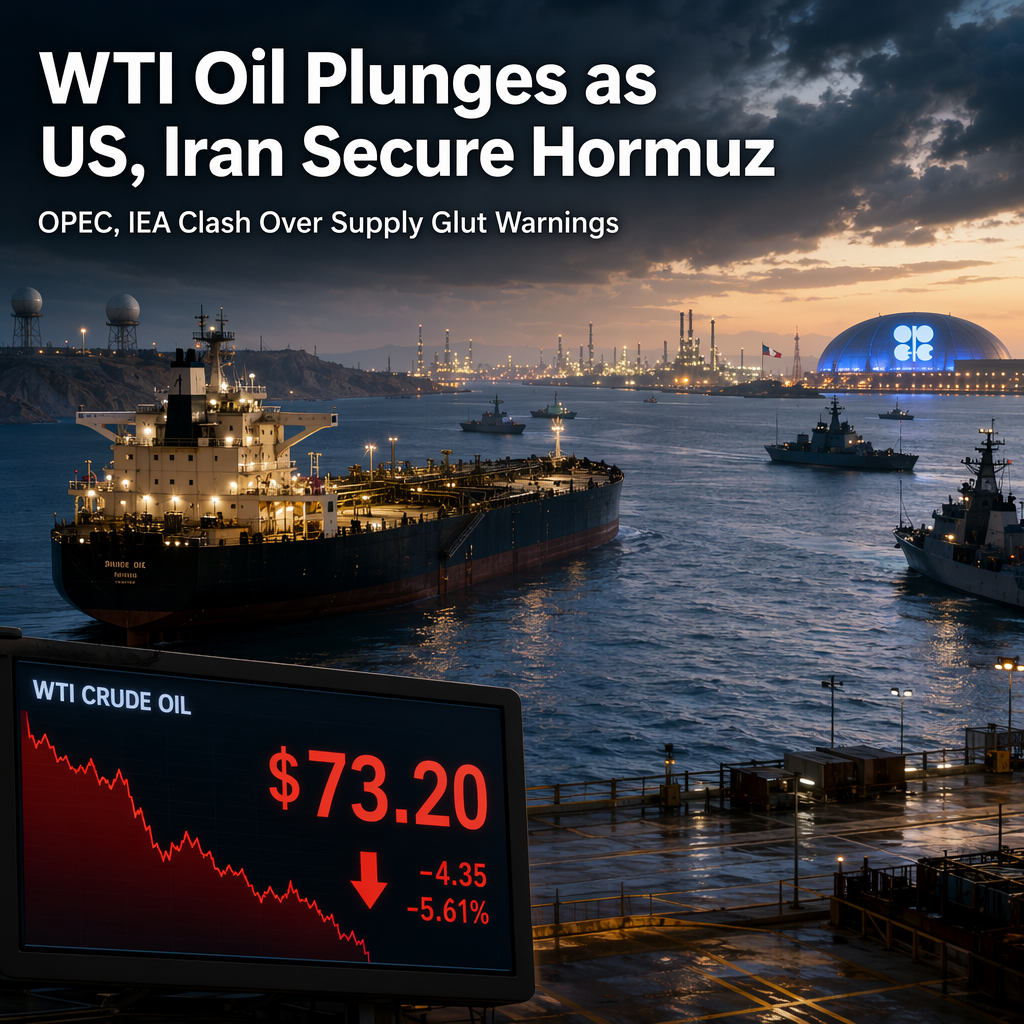
West Texas Intermediate (WTI) Oil prices dropped to around $73.20 on Thursday, marking a 2.35% decline for the day and reaching their lowest level in over three months. This selloff was driven by investor optimism regarding a peace agreement between the United States and Iran, which aims to ensure safe passage through the Strait of Hormuz, a vital route for global oil transportation. The deal, signed on Wednesday, includes provisions for sanctions relief on Iranian oil exports, the release of frozen funds, and a reconstruction fund for war-related damages, according to US officials. Talks to implement the agreement are set to continue on Friday at the Bürgenstock resort, as confirmed by the Swiss Ministry of Foreign Affairs [1].
Despite a significant drawdown in US oil inventories—commercial crude stocks fell by 8.262 million barrels in the week ending June 12, nearly double the 4.6 million barrel draw expected by analysts and marking the tenth consecutive weekly decline—these supportive supply signals were overshadowed by the market's focus on the US-Iran deal and the anticipated normalization of energy flows in the region. US oil stockpiles are now at their lowest level in more than 40 years [1].
Meanwhile, OPEC Secretary General Haitham al-Ghais dismissed the International Energy Agency's (IEA) forecast of a looming supply glut, which projected an 8 million barrel per day surge in supply versus a 2 million barrel per day increase in demand by 2027 if the conflict resolution holds. Al-Ghais criticized the IEA's assumptions as not being based on facts and emphasized OPEC's focus on fundamentals rather than speculative headlines, warning that such forecasts could increase market volatility [2].
The reopening of the Strait of Hormuz is being closely monitored by markets. The US-Iran memorandum of understanding includes a $300 billion plan for Iran's reconstruction and the removal of "all types" of US sanctions. Iran has agreed to allow safe passage of commercial ships without tolls for 60 days, after which further negotiations with Oman and other Gulf states will determine the future administration of the Strait. Al-Ghais welcomed the diplomatic progress but cautioned that it is too early to make definitive market predictions, noting the complexity and importance of the Strait for global energy markets [2].
CONCLUSION
The US-Iran agreement has triggered a sharp decline in WTI oil prices, as markets anticipate improved supply security through the Strait of Hormuz and potential sanctions relief for Iran. While the IEA warns of a possible supply glut, OPEC disputes these projections and urges caution. The market remains highly sensitive to ongoing diplomatic developments and the evolving situation in the region.