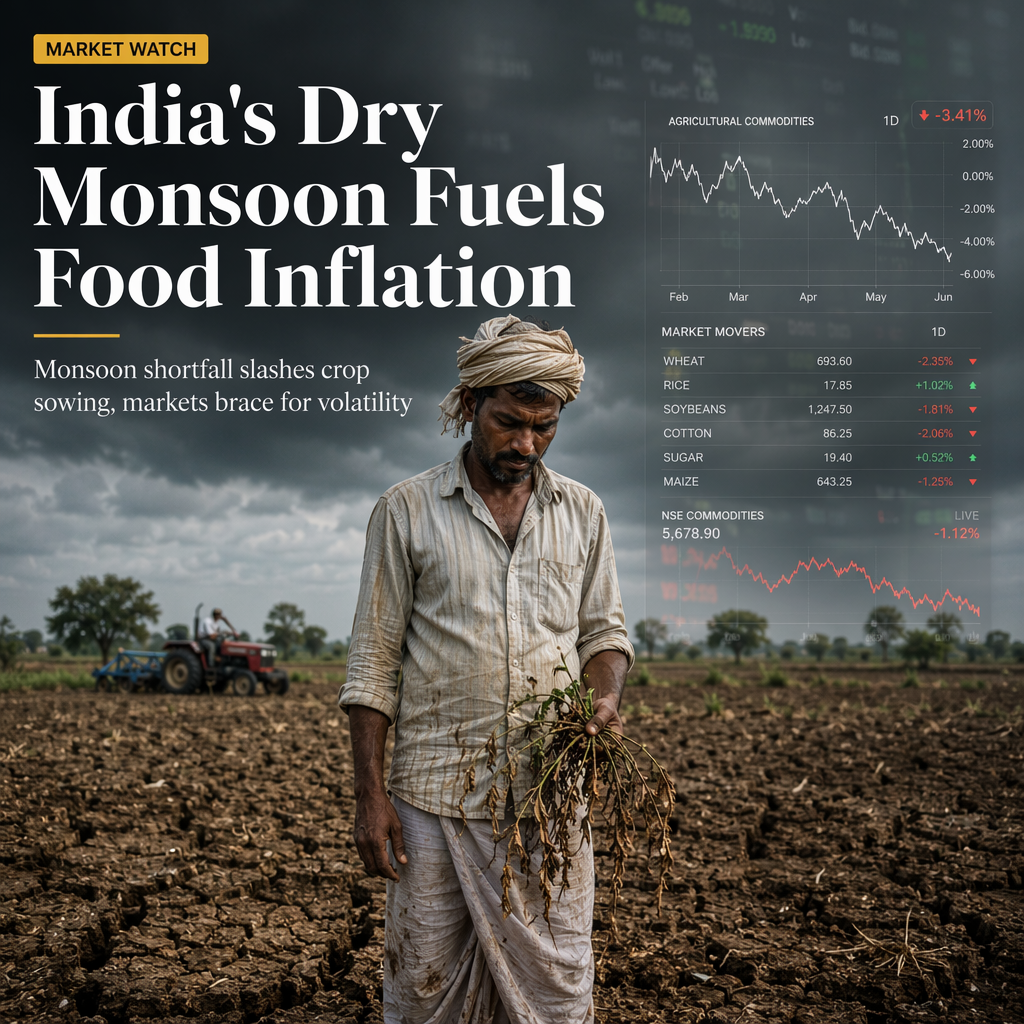
India is experiencing below average and uneven rainfall during the crucial monsoon sowing season, leading to a significant reduction in the planting of key crops such as rice, pulses, and oilseeds. Official data indicates that acreage for some major crops has declined by as much as 39% compared to the previous year, with dry states like Karnataka being particularly affected by the uneven rainfall pattern [1]. This shortfall in sowing is expected to impact the supply of essential food items, raising concerns about rising prices and inflationary pressures in the coming months [1].
Market analysts warn that if the monsoon does not improve, India's food inflation could accelerate. A senior analyst at a Mumbai-based investment firm stated, "The uneven rainfall pattern is a major risk to the agricultural output this season. With supply shortages looming, food inflation could rise sharply, impacting overall consumer price inflation" [1]. Traders are closely monitoring price levels for rice and pulses, noting that support levels could be breached if crop output falls further, while resistance is expected at previous highs set during last year's inflationary period [1].
Technical charts reflect heightened volatility in agricultural commodity futures, with increased trading volumes and price swings. Analysts recommend caution for traders, suggesting that the current environment favors short-term trading strategies and hedging against inflation risks [1]. The Reserve Bank of India is also expected to keep a close watch on inflation data, as persistent food price increases could influence monetary policy decisions in the months ahead [1].
In summary, India's weak and uneven monsoon is directly impacting crop sowing, raising fears of food inflation and prompting market participants to adjust their trading strategies in response to increased uncertainty [1].
CONCLUSION
India's weak monsoon has led to a sharp decline in crop sowing, intensifying concerns about food inflation and market volatility. Analysts and traders are adopting cautious strategies, while the Reserve Bank of India is expected to monitor inflation data closely for potential policy responses. The situation remains fluid, with further developments hinging on the progress of the monsoon.