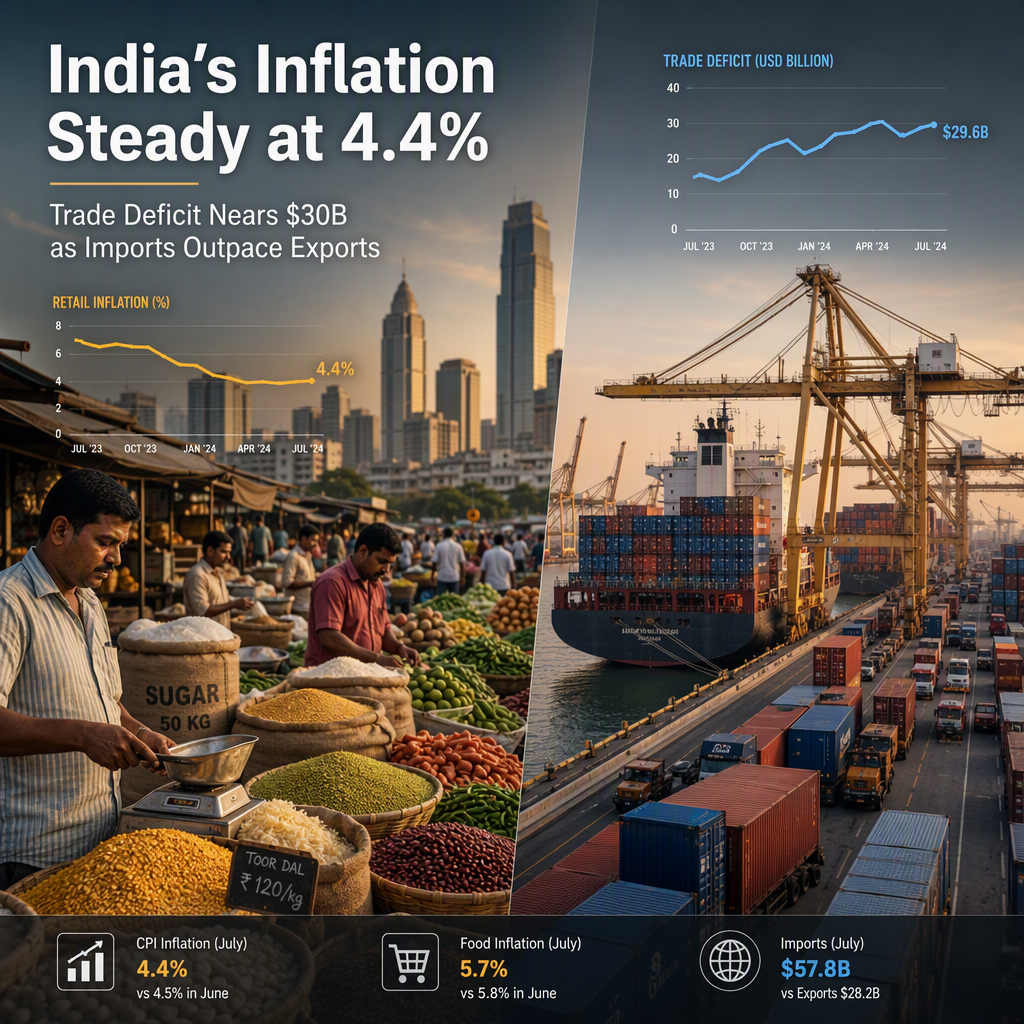
According to DBS Group Research, India's headline inflation for July remained steady at 4.4% year-on-year, matching the rate observed in June [1]. The core inflation reading is expected to stay below 4%, attributed to softer prices in precious metals during the period [1]. Food staples exhibited mixed trends, with increases noted in pulses, sugar, milk, and edible oils, while vegetable prices have stabilized. The report highlights that a catch-up in rainfall during July has supported improved sowing activity, which could influence future food price trends [1].
Adjustments in domestic retail fuel prices, specifically a 10% year-on-year increase in non-subsidised LPG in July, are anticipated to impact the utilities and fuel components of the inflation basket [1]. Despite these pressures, the overall core inflation remains subdued, aided by the moderation in precious metals prices [1].
On the trade front, DBS projects that India's trade data will show resilient export performance; however, this is expected to be outweighed by a stronger import bill. As a result, the trade deficit is forecast to remain in negative territory, around USD 29 billion for July, which is close to the USD 30 billion deficit recorded in June [1].
The inflation and trade numbers are scheduled for release in the second week of August, which will provide further clarity on the economic outlook [1].
CONCLUSION
India's July inflation remained steady at 4.4% year-on-year, with core inflation staying below 4% due to softer precious metals prices. The trade deficit persists near USD 29–30 billion, as resilient exports are offset by higher imports. Market participants will closely watch the official data releases in August for further direction.