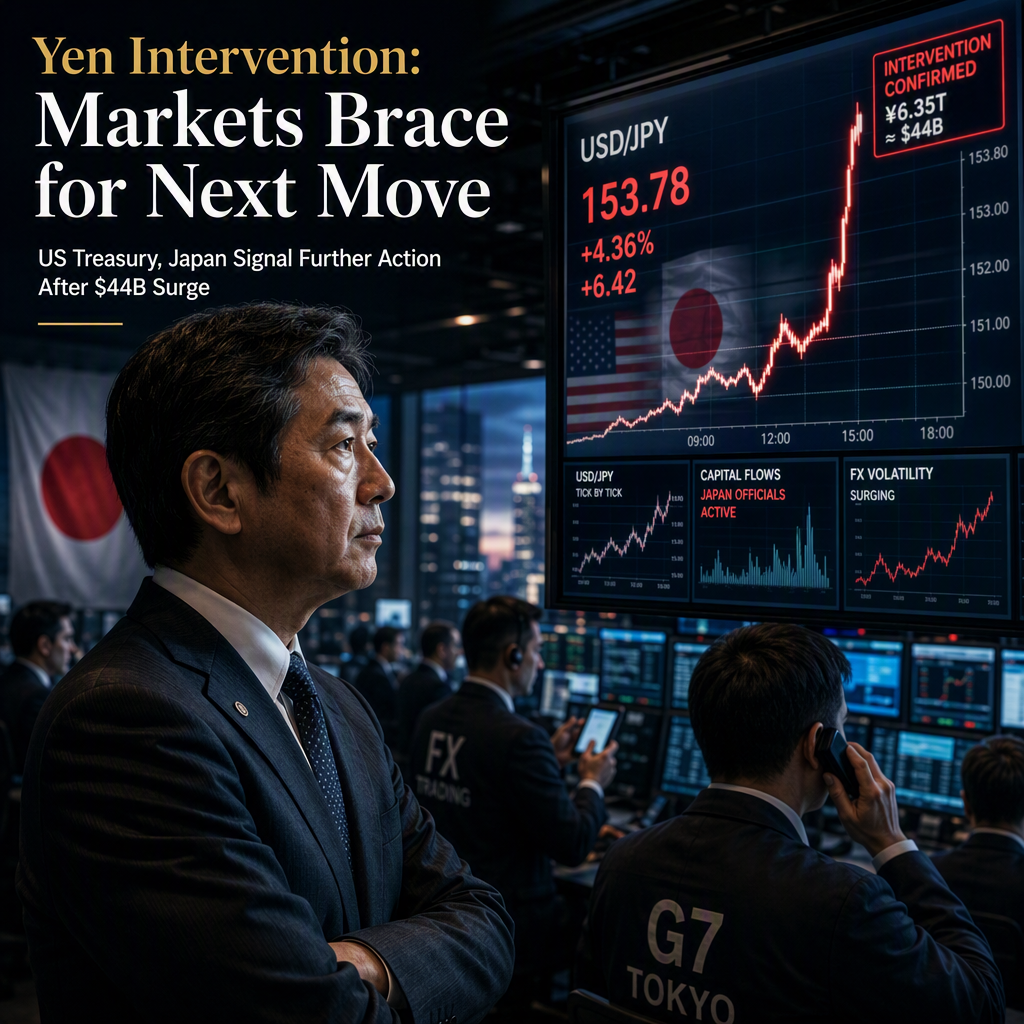
The U.S. Treasury Department has informed currency market participants to prepare for potential additional intervention in the yen, following Thursday's significant action by Japanese authorities to support their currency [1]. On Thursday, Japan intervened in the foreign-exchange markets by buying yen and selling dollars, which led to the yen surging to its highest level since mid-May [1]. Analysts estimate that the scale of the intervention may have reached up to $44 billion, underscoring the urgency and magnitude of Japan's efforts to stabilize the yen [1].
After the intervention, the yen pared some of its gains as Asian technology shares surged, but overall market sentiment remains cautious [1]. Market participants are now bracing for further operations, with banks instructed to be ready should Japanese authorities decide to step in again [1]. Technical analysis highlights resistance near the 155 level against the dollar and support levels established during the intervention, with traders closely monitoring central bank statements for signs of renewed action [1].
The Bank of Japan's governor has flagged upside inflation risks and indicated that faster interest rate hikes are possible, adding to market speculation about the yen's future trajectory and Japan's monetary policy stance [1]. While the US-Japan coordinated intervention has helped lift the yen to the 155 level against the dollar, concerns persist regarding Tokyo's relatively loose policy stance and whether interventions can provide lasting support for the currency [1].
Traders are advised to watch for increased volatility if further intervention or policy shifts occur, as the market remains sensitive to central bank communications and technical price levels [1].
CONCLUSION
Japan's large-scale intervention, potentially totaling $44 billion, has temporarily strengthened the yen, but market participants remain cautious about the sustainability of these gains. The possibility of further intervention and signals of potential rate hikes from the Bank of Japan are keeping traders alert for increased volatility and further market-moving developments.