
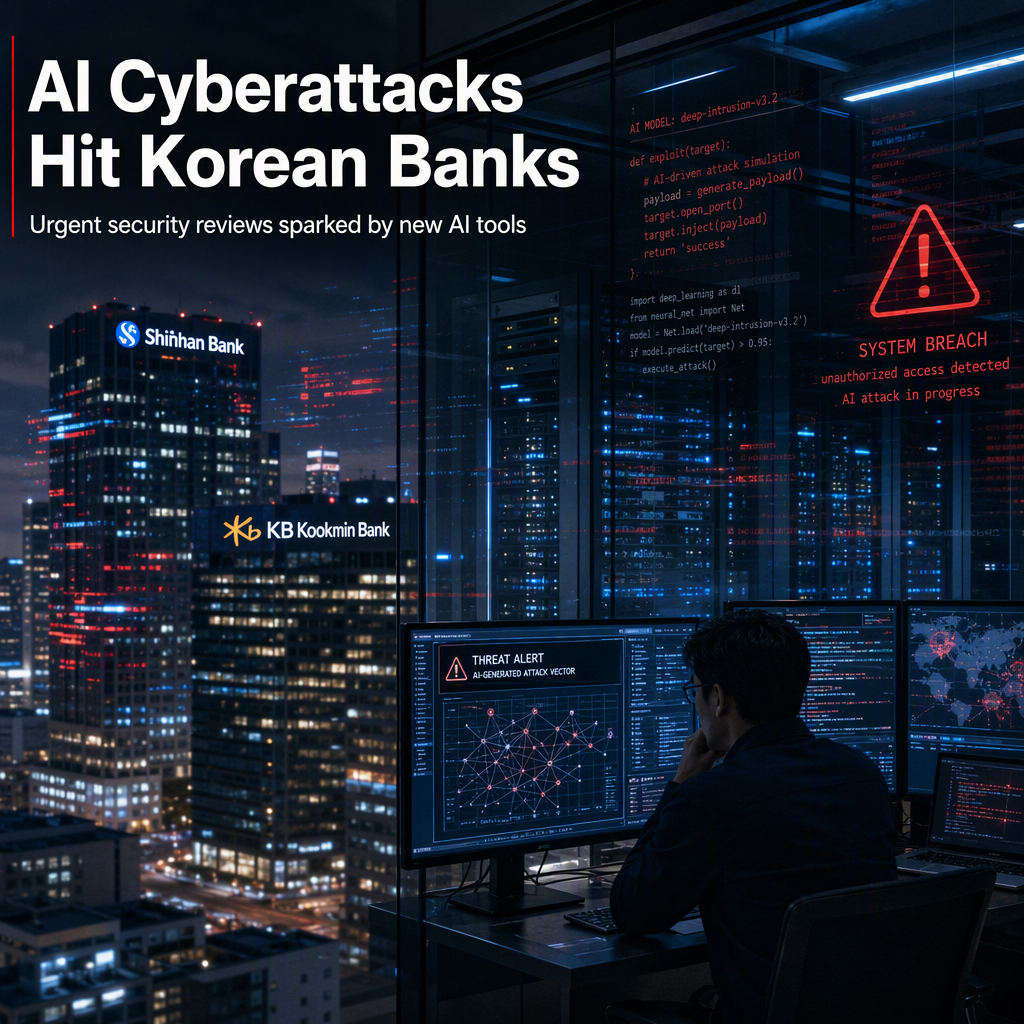
Recent cyberattacks on South Korean banks, including Shinhan Bank and KB Kookmin Bank, have been identified as leveraging advanced artificial intelligence tools such as Anthropic's Claude Code and ARTEX, an open-source utility developed in China, according to cybersecurity firm CrowdStrike [1]. Analysis of the attack vectors revealed the use of automated code generation and penetration tools, with AI agents capable of adapting to network defenses in real time [1]. CrowdStrike's report emphasized the increasing sophistication of these attacks, stating that AI-driven tools enabled attackers to bypass standard security protocols and identify vulnerabilities much faster than previously observed [1].
ARTEX, which is open-source and available on several code-sharing platforms, has reportedly gained traction among hacking communities in Asia. The combination of proprietary AI models like Claude Code and open-source utilities such as ARTEX presents a heightened threat for financial institutions, especially those operating legacy systems [1]. Despite the severity of the attacks, no financial losses or disruptions to banking services have been immediately reported by Shinhan Bank or KB Kookmin Bank [1].
Cybersecurity experts warn that these incidents highlight the urgent need for upgraded cyber defenses and raise concerns about potential future monetary losses if AI-enabled attacks continue to evolve [1]. Industry analysts recommend that the banking sector adopt multi-layered security solutions and enhanced monitoring for AI-generated attack patterns, noting that traditional firewalls and detection systems are increasingly insufficient against adversaries utilizing generative AI and adaptive code [1].
In response, South Korean financial authorities are reportedly reviewing current cybersecurity protocols and may issue new guidelines covering AI-related risks for banks and other financial institutions in the near future [1].
CONCLUSION
The use of AI tools in recent cyberattacks on South Korean banks signals a new level of threat to the financial sector, prompting urgent reviews of cybersecurity protocols. While no immediate financial losses or service disruptions have been reported, experts warn that legacy systems are particularly vulnerable and call for enhanced, multi-layered defenses. The market is likely to see increased investment in cybersecurity as authorities and banks respond to evolving AI-driven risks.