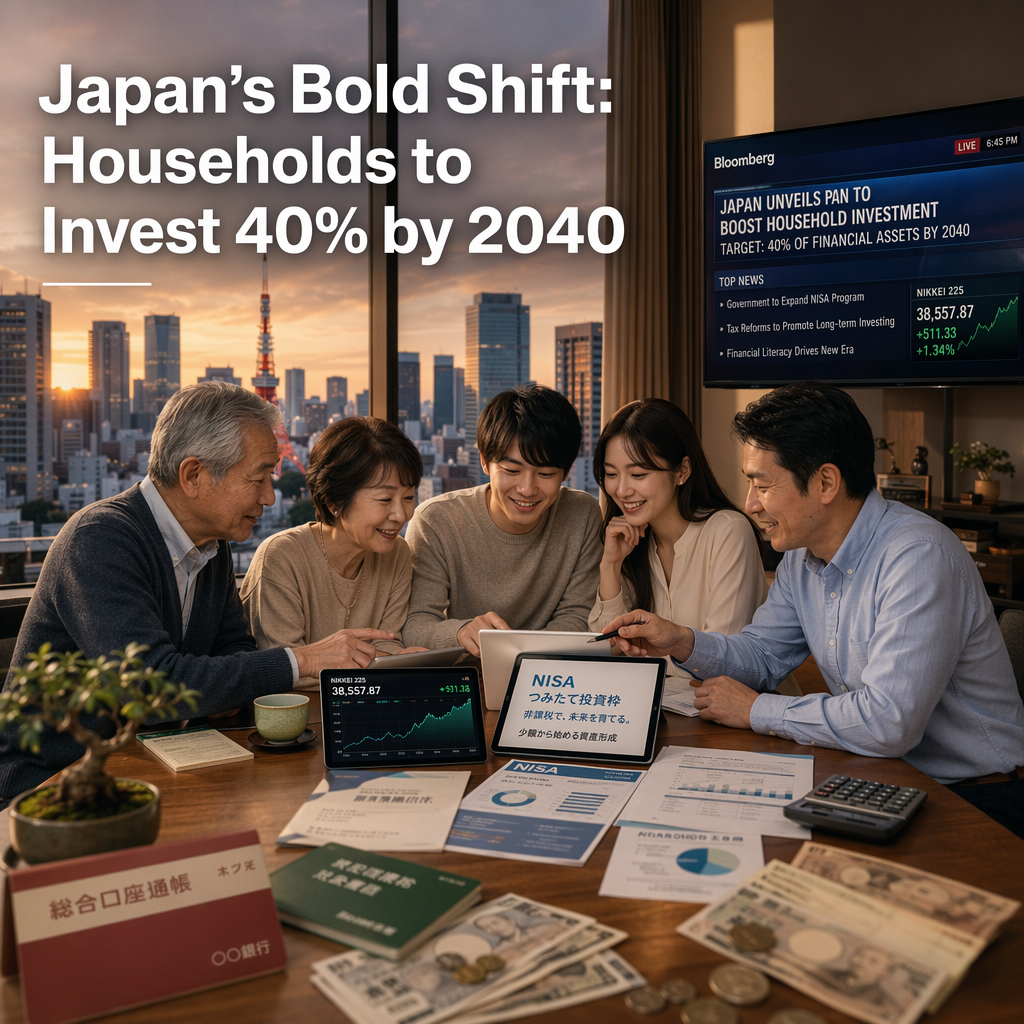
The Japanese government has announced a strategic initiative aimed at increasing the proportion of household financial assets allocated to stocks, investment trusts, and bonds from the current 23% to 40% by the year 2040 [1]. This policy shift is designed to encourage households to move away from traditional savings and embrace investment opportunities, thereby mobilizing a significant pool of capital for economic growth [1].
To facilitate this transition, the government is considering measures such as relaxing financial regulations and organizing public-private discussions on artificial intelligence [1]. Additionally, programs like NISA, a tax-free investment scheme targeting retail investors, are being promoted to stimulate greater market participation among Japanese households [1].
Officials believe that increasing household investment in financial markets will not only help individuals build wealth but also support the broader Japanese economy, which faces challenges from an aging population and persistently low interest rates [1]. The article does not provide specific technical analysis, price levels, or trading advice, focusing instead on the policy direction and the government's intent to foster a more investment-oriented culture [1].
CONCLUSION
Japan's government is taking concrete steps to shift household assets from savings to investments, targeting a substantial increase by 2040. This policy is expected to stimulate economic growth and help households build wealth, though the immediate market impact remains moderate as the focus is on long-term structural change. The initiative underscores Japan's commitment to addressing demographic and economic challenges through financial market participation.