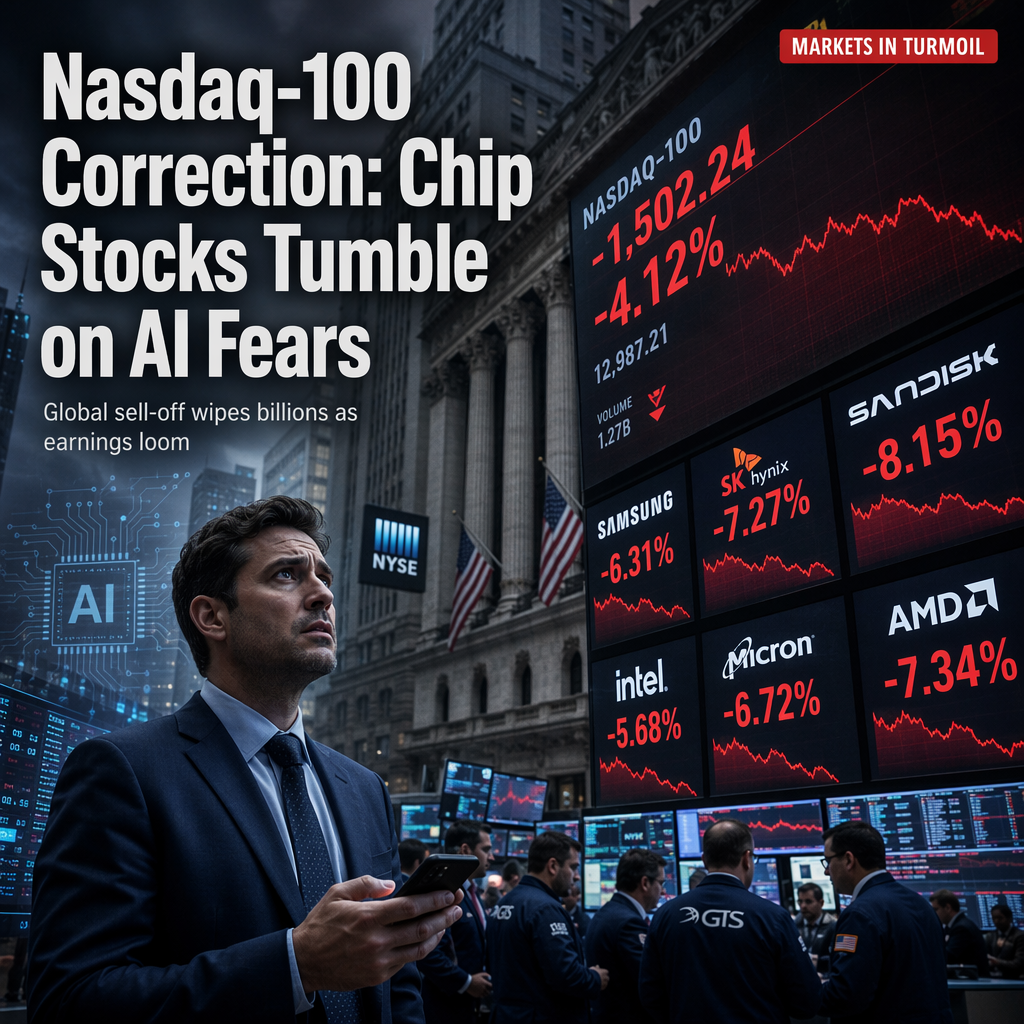
On July 28, 2026, the Nasdaq-100 index briefly entered correction territory, defined as a drop of 10% or more from its most recent record high, following a sharp global sell-off in chip and memory stocks [1]. Shares of major U.S. chip and memory companies, including Sandisk, Western Digital, Seagate, Micron, and AMD, each fell around 10% in early trading, while Dell Technologies, which relies on these components for its servers, tumbled 13%. Intel shares slid 7% [1].
The sell-off originated overnight in Asian markets, where Samsung Electronics and SK Hynix, both primary suppliers of memory for AI data centers, plunged more than 15%. Kioxia, another storage maker, dropped 18% [1]. The downturn was triggered by investor concerns following an unverified report that a Chinese state-backed firm had begun mass production of domestic chip-making tools. Although the report did not name the company and NBC News could not verify it, shares of established chip manufacturing equipment makers such as ASML, Canon, and Nikon also fell sharply [1].
This volatility comes ahead of major earnings reports from Meta, Amazon, Microsoft, and other tech giants investing heavily in AI data centers. Last week, Alphabet shares dropped 7% after reporting results and raising projected capital expenditures to as much as $205 billion, mostly for data center expansion [1]. Evercore analyst Mark Mahaney suggested Alphabet's increased Capex could prompt similar moves from Microsoft and Amazon, noting that "cloud demand appears relentless" despite investor jitters [1].
JPMorgan estimates that AI-related spending by companies will reach about $870 billion by the end of 2026, a 77% increase from the previous year. Hyper scalers like Amazon, Meta, Microsoft, and Alphabet are expected to account for $750 billion of that total, according to JPMorgan's Fabio Bassi [1]. In contrast, Apple, which is not investing heavily in its own data centers, rallied about 1% on Tuesday, reaching a market cap of over $5 trillion for the first time and surpassing Nvidia as the world's largest company by market value [1].
CONCLUSION
The Nasdaq-100's brief correction underscores heightened investor anxiety around the global chip sector, driven by AI-related spending and competitive pressures. While chip and memory stocks suffered steep declines, Apple bucked the trend, reaching a historic market cap milestone. Upcoming earnings from major tech firms and continued AI investment will be pivotal for market direction.