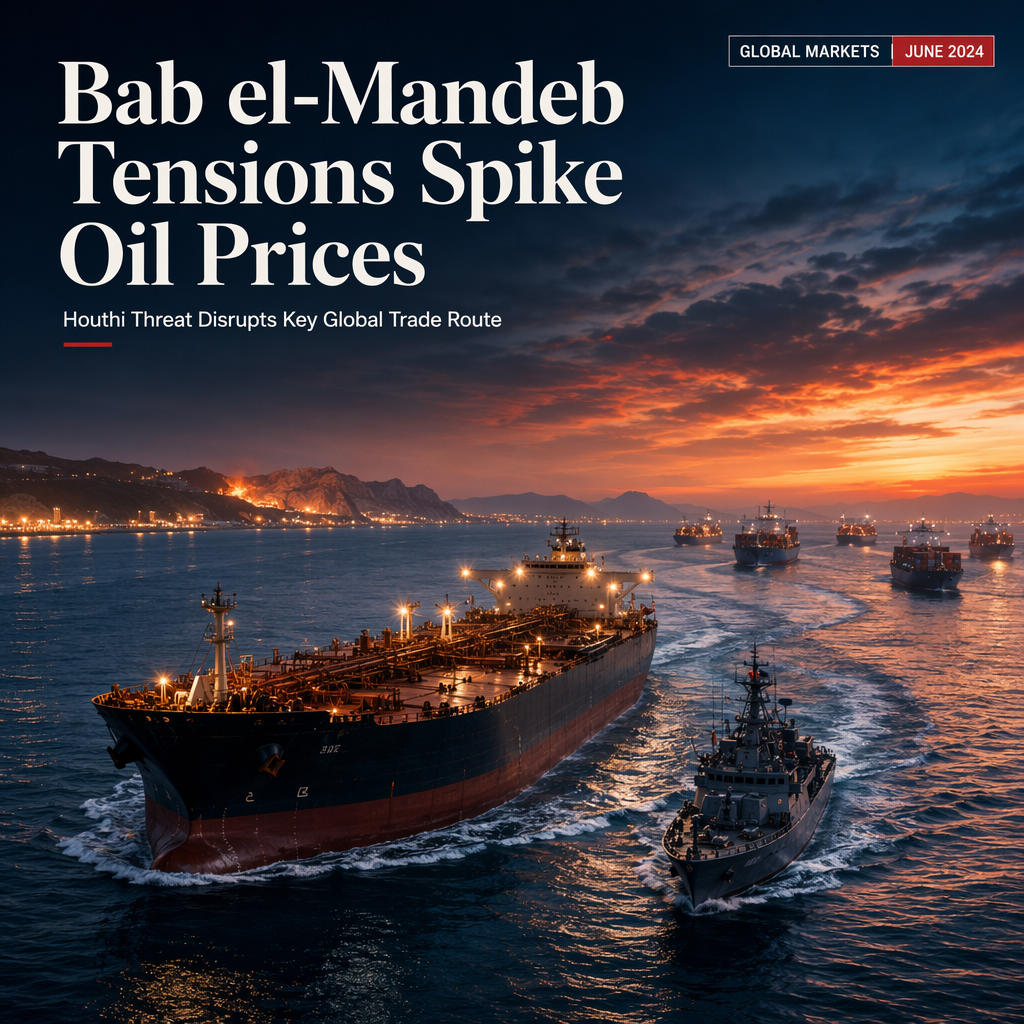
Yemen’s Houthi rebels have announced the closure of the Bab el-Mandeb Strait to Saudi-linked shipping, citing retaliation for Saudi Arabia’s blockade on Yemen and a recent attack on Sanaa’s international airport, according to the Guardian as reported by fxstreet [1]. The Houthis claim that six ships were forced to reroute on Tuesday, though there is no independent confirmation of this action [1]. The Bab el-Mandeb Strait is a critical maritime chokepoint, with approximately 12% of global trade passing through its waters [1].
The Iran-backed group reportedly sent warnings to shipowners, advising them against calling at Saudi Arabian ports [1]. In response to the potential disruption, US President Donald Trump stated on Tuesday that the United States would respond if Houthi militants interfered with the waterway, but did not provide specific details on possible actions [1].
Market reaction to the news was immediate, with West Texas Intermediate (WTI) crude oil prices rising 0.58% on the day to $84.75 at the time of reporting [1]. The article highlights that political instability and threats to key shipping routes like Bab el-Mandeb are significant drivers of oil price volatility [1].
The situation has raised concerns about the potential for a broader regional conflict and further disruptions to global oil supplies and international trade, given the strategic importance of the Bab el-Mandeb Strait [1].
CONCLUSION
The Houthi threat to close the Bab el-Mandeb Strait has heightened geopolitical tensions and driven a notable increase in oil prices. With 12% of global trade at risk, markets are closely monitoring the situation for further escalation and potential supply disruptions.