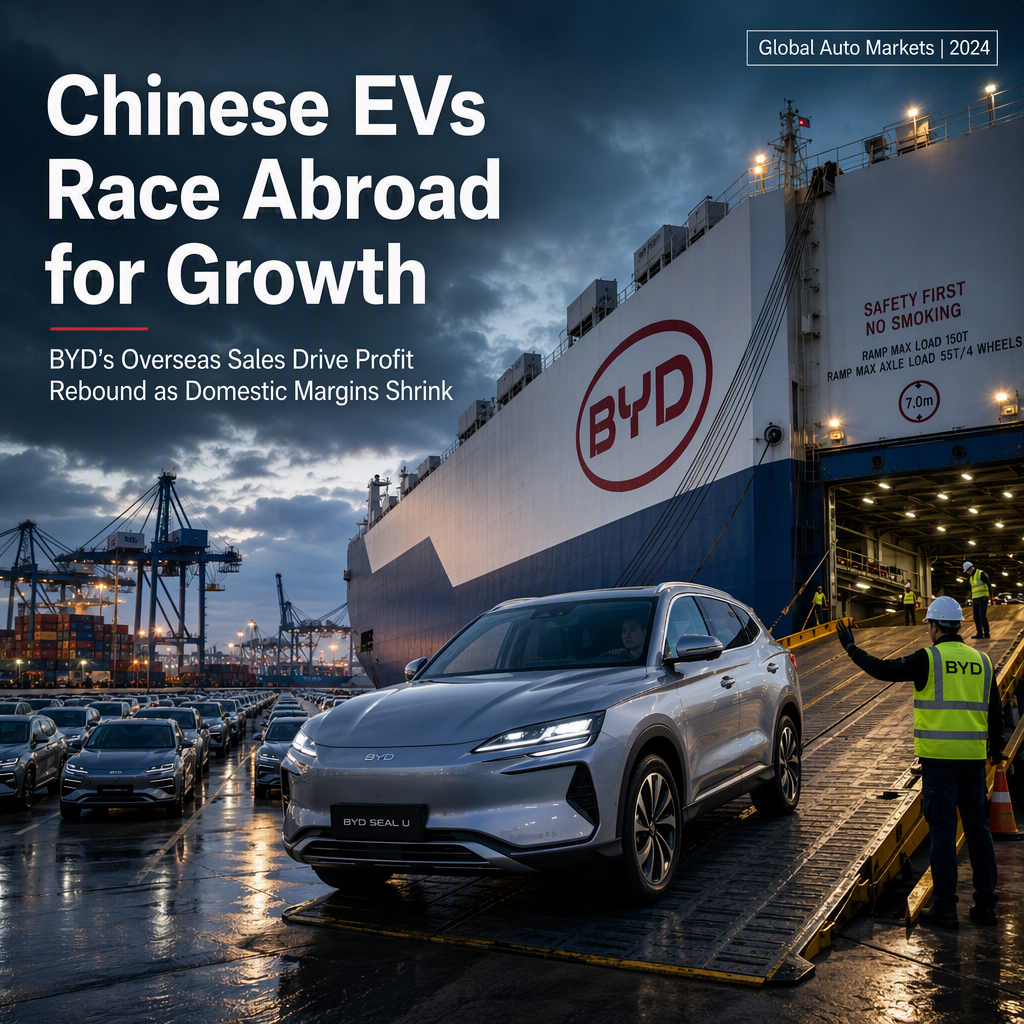
Chinese electric vehicle (EV) manufacturers are grappling with intense domestic competition, leading to shrinking margins and overproduction, particularly in high-tech sectors such as EVs and artificial intelligence components [1]. Companies like Autolink are rapidly scaling up production to maintain their edge, but this hypercompetitive environment has resulted in price wars, thinner profit margins, and, in some cases, losses [1]. To address domestic market saturation, Chinese manufacturers have increasingly turned to export markets, raising concerns in the U.S. and Europe about a potential 'overcapacity' crisis and prompting fears of possible trade restrictions [1].
The Chinese government has rejected claims of overcapacity, attributing increased exports to the country's competitive advantage and manufacturing efficiency, though policymakers remain wary of potential backlash from major trading partners [1]. Executives and analysts warn that unless new markets are found or conditions improve, Chinese manufacturers may face prolonged periods of low profitability. The government is encouraging firms to innovate, move up the value chain, and diversify export destinations to mitigate these risks [1].
Amid this backdrop, BYD, a leading Chinese EV manufacturer, reported a rebound in second-quarter profits, driven by strong overseas sales that offset a loss of market share in China's ultracompetitive market [2]. BYD's ramp-up of its Hungary plant and the launch of new models have underpinned its positive outlook for the second half of the year [2]. The company is aggressively expanding its international presence, particularly in Europe, leveraging competitive pricing and technology to capture market share [2].
Market analysts highlight that while BYD faces risks from the domestic slowdown, its robust international sales and continued innovation suggest a positive outlook for the remainder of the year [2]. The expansion of manufacturing capacity in Europe and the introduction of new models are seen as key drivers for sustaining profitability [2]. Trading sentiment for BYD remains positive, with investors and analysts closely watching the company's global strategy and performance [2].
CONCLUSION
Chinese EV manufacturers are under pressure from fierce domestic competition, leading to lower margins and a push toward export markets. BYD stands out by successfully leveraging overseas sales to offset domestic challenges, with its European expansion and new models supporting a positive outlook. The sector's global expansion and innovation efforts will be critical for future profitability and are being closely monitored by investors.