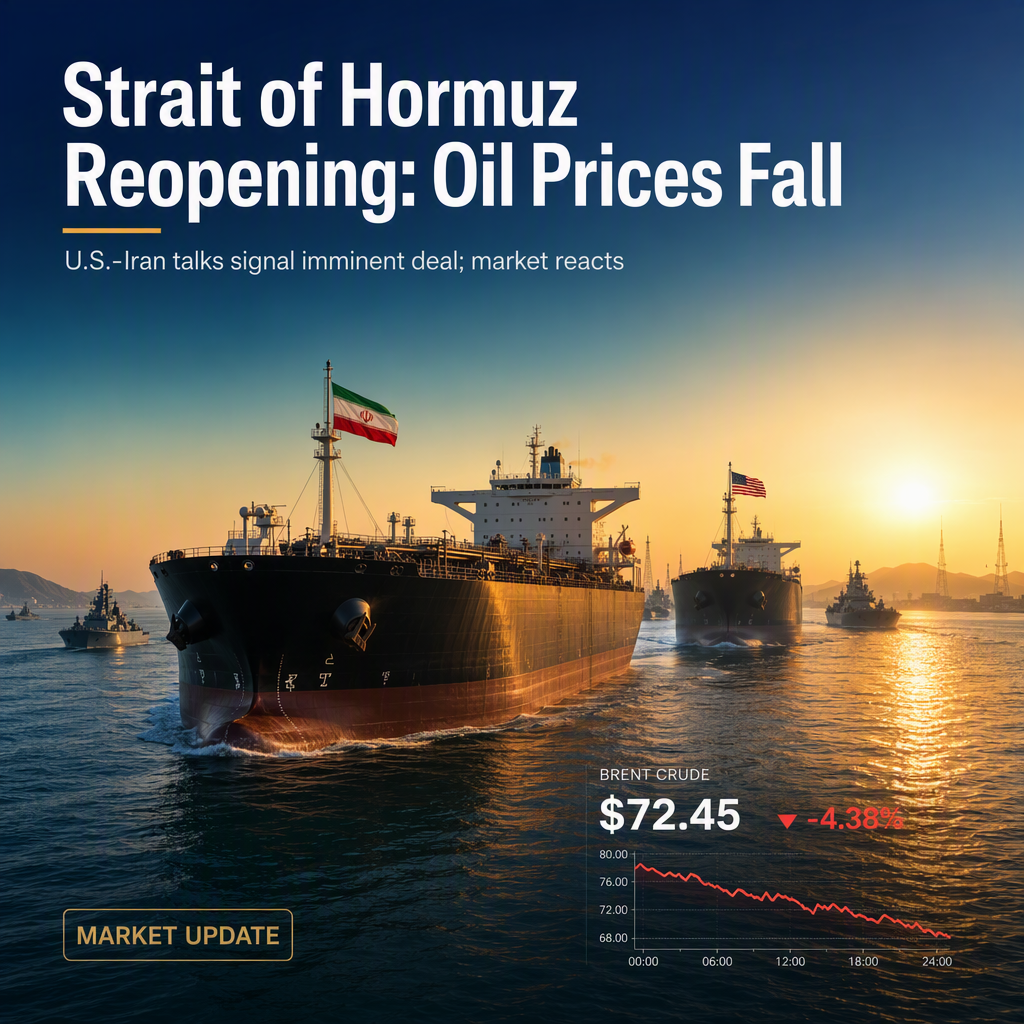
U.S. Treasury Secretary Scott Bessent stated in a CNBC 'Squawk Box' interview that the United States and Iran could reach a deal as soon as Tuesday or Wednesday to reopen the Strait of Hormuz, ensuring freedom of movement for commercial ships [1]. Bessent confirmed ongoing talks with Iranian officials, emphasizing, 'There is a chance we may have a deal today or tomorrow to open the strait and move towards a more normalized position in this conflict' [1].
When questioned about whether Iran would be permitted to charge a toll for passage, Bessent clarified, 'It would be freedom of movement,' indicating that commercial shipping would not be subject to tolls under the potential agreement [1]. Despite recent tensions in the region, Bessent noted that 'even though things are still a little dicey there over the past few days, we saw quite a few ships coming out even now' [1].
Following Bessent's remarks, U.S. crude oil futures fell approximately 4% to trade below $77 per barrel, reflecting market optimism about the possible reopening of the strategic waterway and the easing of supply concerns [1].
CONCLUSION
The prospect of a U.S.-Iran deal to reopen the Strait of Hormuz with guaranteed freedom of movement has led to a significant decline in oil prices. Market participants appear to be responding positively to the potential resolution of shipping disruptions in the region.