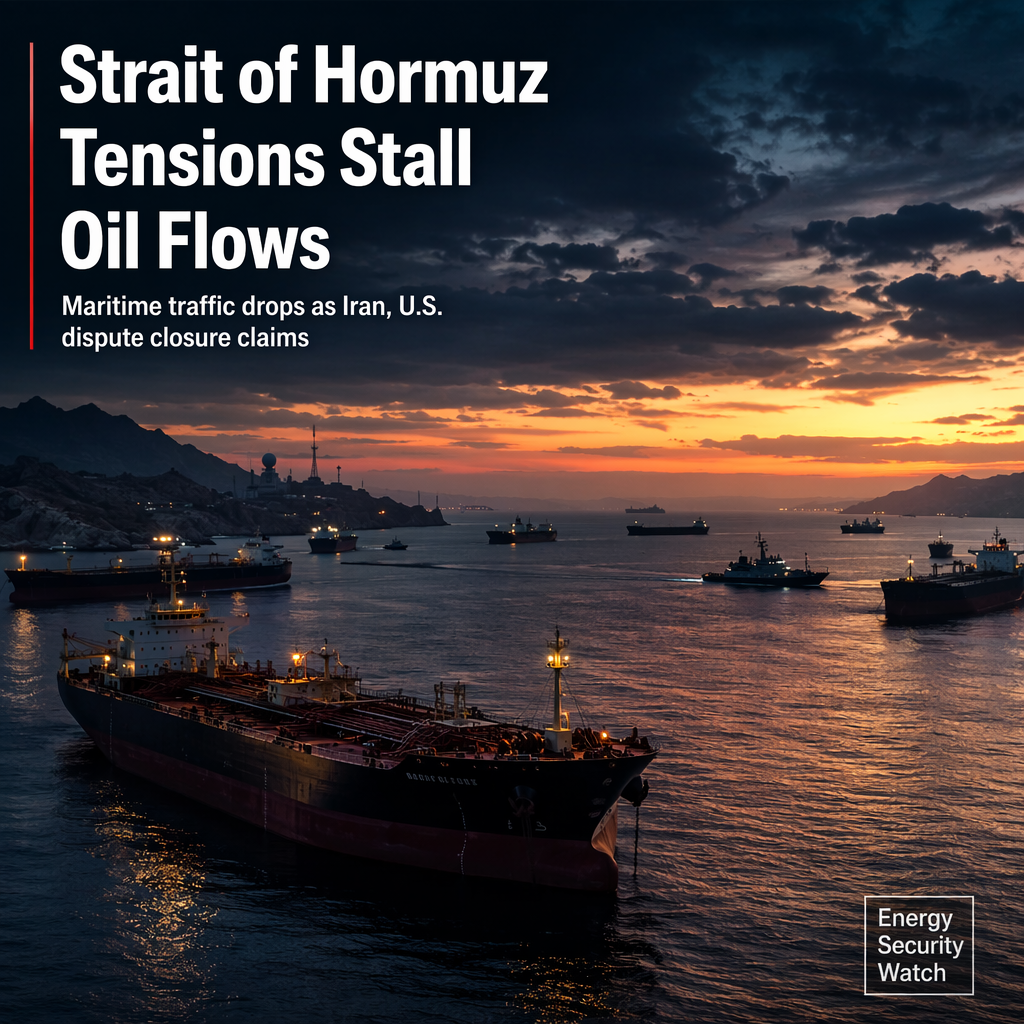
Shipping through the Strait of Hormuz, a critical passage for global oil and gas transport, stalled over the weekend following Iran's announcement that it had closed the waterway due to alleged ceasefire violations after Israeli strikes in southern Lebanon [1]. Maritime intelligence company Windward reported that oil tanker traffic, which had shown signs of recovery after a recent 14-point memorandum of understanding (MOU) between the U.S. and Iran, has already encountered setbacks [1]. On June 21, 2026, oil tankers and cargo vessels were observed anchored off Port Sultan Qaboos in Muscat, Oman, reflecting the renewed disruption [1].
Windward's analysis indicated that only 12 ships transited the Strait of Hormuz on Sunday, a significant drop from more than 21 the previous day. Notably, five of the eight inbound vessels were operating 'dark,' meaning their Automatic Identification System (AIS) transponders were disabled to conceal their movements, a pattern reminiscent of the late-blockade period rather than normal operations [1]. Trade intelligence firm Kpler noted that at least 20 tankers passed through the strait on Thursday, marking the highest traffic since June 2, but this remains well below prewar levels, which saw over 100 ships daily, including dozens of tankers [1].
Despite Iran's claims of closure, a separate analysis by Lloyd's List found that commercial traffic continued to move through the strait over the weekend, challenging Iran's assertion [1]. The U.S. military also denied Iran's claim, stating that the waterway remained open and emphasizing that 'Iran does not control the Strait of Hormuz' [1].
The situation has prompted high-level diplomatic engagement, with U.S. Vice President JD Vance arriving in Switzerland for talks with the Iranian delegation to clarify the terms of ending the ongoing war [1]. The market implications are significant, as the strait typically handles around 20% of the world's oil traffic, and any sustained disruption could impact global energy supplies [1].
CONCLUSION
The renewed disruption in the Strait of Hormuz has heightened concerns over global oil supply security, with conflicting claims from Iran and the U.S. regarding control of the waterway. While some commercial traffic persists, the sharp decline in ship transits signals ongoing instability. Market participants are closely monitoring diplomatic efforts to resolve the situation.