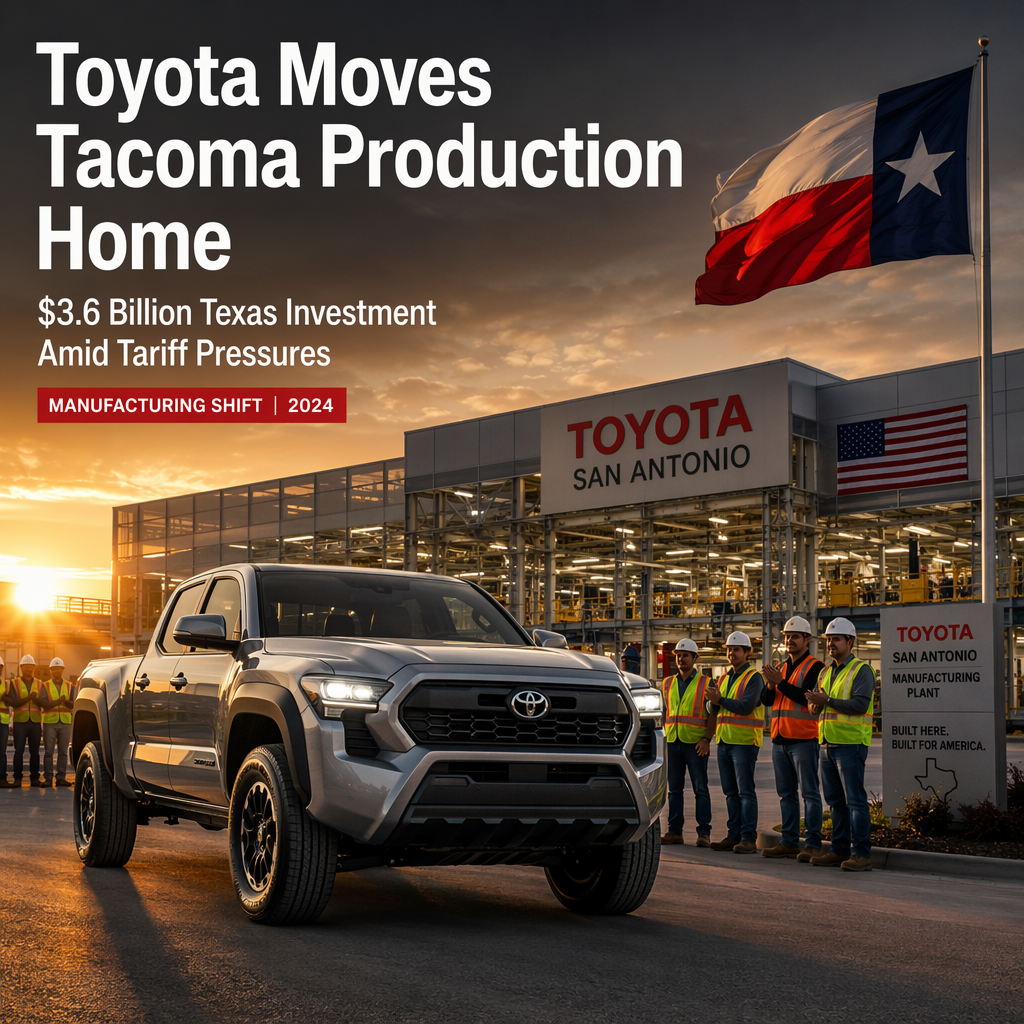
Toyota Motor has announced a $3.6 billion investment in its San Antonio plant in Texas, marking a strategic shift of some Tacoma pickup truck production from Mexico back to the United States [1]. This move comes in response to tariffs imposed by the Trump administration, which have significantly impacted Japanese automakers, including Toyota, resulting in a $13 billion profit hit [1]. The new assembly line in Texas will produce the Tacoma pickup, reversing a decision made five years ago to move production to Mexico [1].
The investment is expected to boost local production capacity and support jobs in the region, reinforcing Toyota's commitment to expanding its U.S. manufacturing footprint [1]. This initiative follows previous announcements by Toyota regarding the construction of a $2 billion Texas assembly plant and a $1 billion investment in U.S. factories to enhance electric vehicle (EV) and hybrid vehicle capacity [1].
Toyota has forecasted a decrease in net profit for FY26, attributing this to Middle East tensions and ongoing trade issues [1]. The company's decision to bring more production to the U.S. is seen as a strategic response to both market and political challenges, aiming to stabilize earnings and maintain competitiveness in the American automotive market [1].
Market sentiment suggests that Toyota's increased U.S. investment may help offset losses from tariffs and strengthen its position against rivals in the pickup truck segment, especially as American consumers continue to favor locally produced vehicles [1].
CONCLUSION
Toyota's $3.6 billion investment in Texas is a direct response to tariff pressures and aims to mitigate profit losses by shifting Tacoma production back to the U.S. This move is expected to bolster local manufacturing, support jobs, and enhance Toyota's competitiveness in the American market. Despite forecasted profit declines, the company's strategic pivot may help stabilize earnings and offset tariff-related challenges.