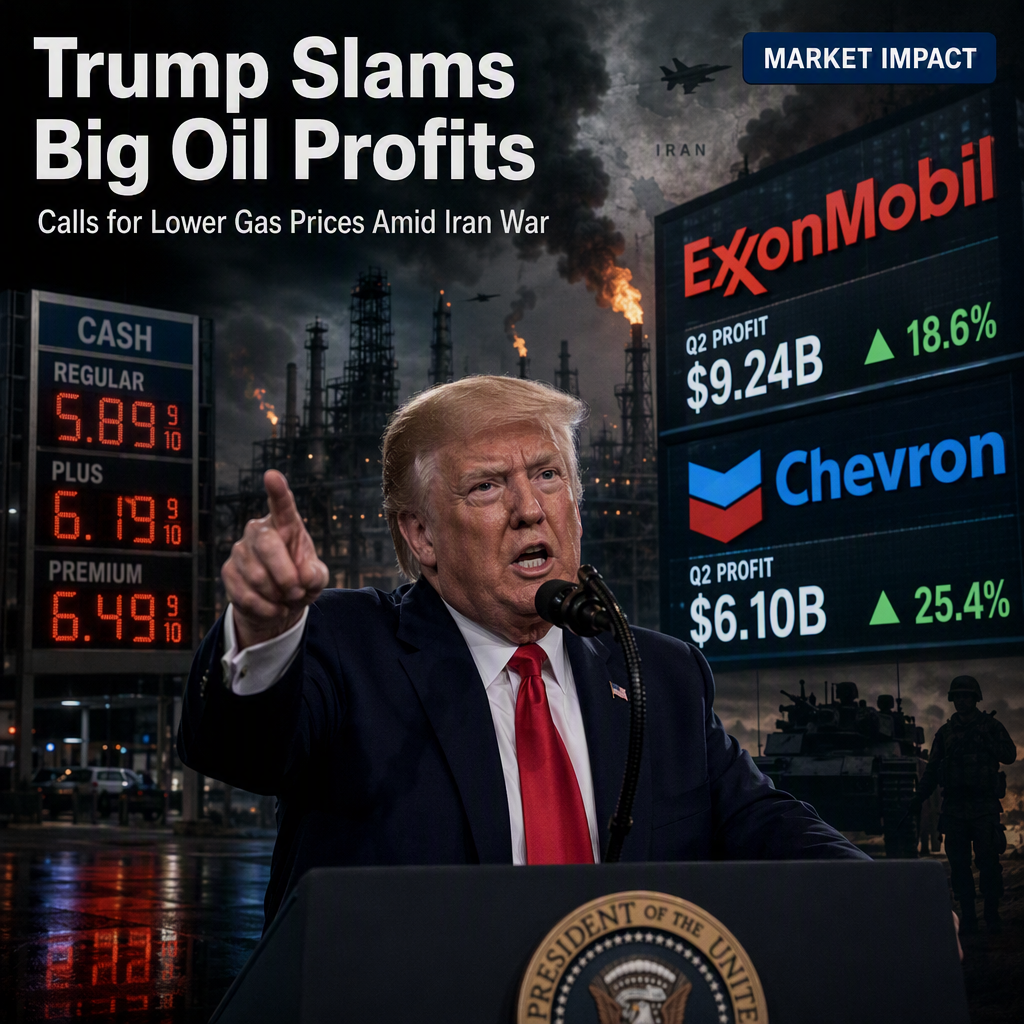
President Donald Trump publicly criticized major U.S. oil companies, specifically ExxonMobil and Chevron, for their substantial profits during the ongoing war with Iran. Trump stated, "They're making too much money, okay, based on a shortage," and suggested that these companies should return some of their profits to the American public and reduce consumer prices [1].
ExxonMobil reported earnings of $14.5 billion in the second quarter of 2026, which is double its profits from the same period the previous year [1]. Chevron posted $12 billion in earnings, marking its highest quarterly profit in at least six years, according to Reuters [1]. Trump emphasized, "Chevron, too much money. ExxonMobil, too much. Too much money," and added that when a company makes twelve times what it did the year before, it should give some back to the public and cut retail prices [1].
The surge in oil company profits coincided with oil prices rising above $100 a barrel at times due to the Iran war. However, oil prices fell on Monday as tensions between the U.S. and Iran appeared to ease, with Peter Cardillo, chief market economist at Spartan Capital Securities, attributing the drop to Trump's cancellation of severe attacks against Iran and hopes for a diplomatic resolution [1].
Trump also criticized Chevron CEO Mike Wirth for not acknowledging the Trump administration's role in supporting the oil industry, referencing Wirth's appearance on "Sunday Morning Futures with Maria Bartiromo." Trump asserted that without his administration, the oil industry "would be DEAD," and noted Chevron's return to Venezuela, where they are now "far bigger and stronger than ever before, expecting to make a fortune" [1].
CONCLUSION
President Trump's remarks highlight political pressure on major oil companies to address high profits and consumer prices amid geopolitical tensions. The combination of record earnings and volatile oil prices underscores the significant market impact of the Iran conflict and U.S. policy decisions.