
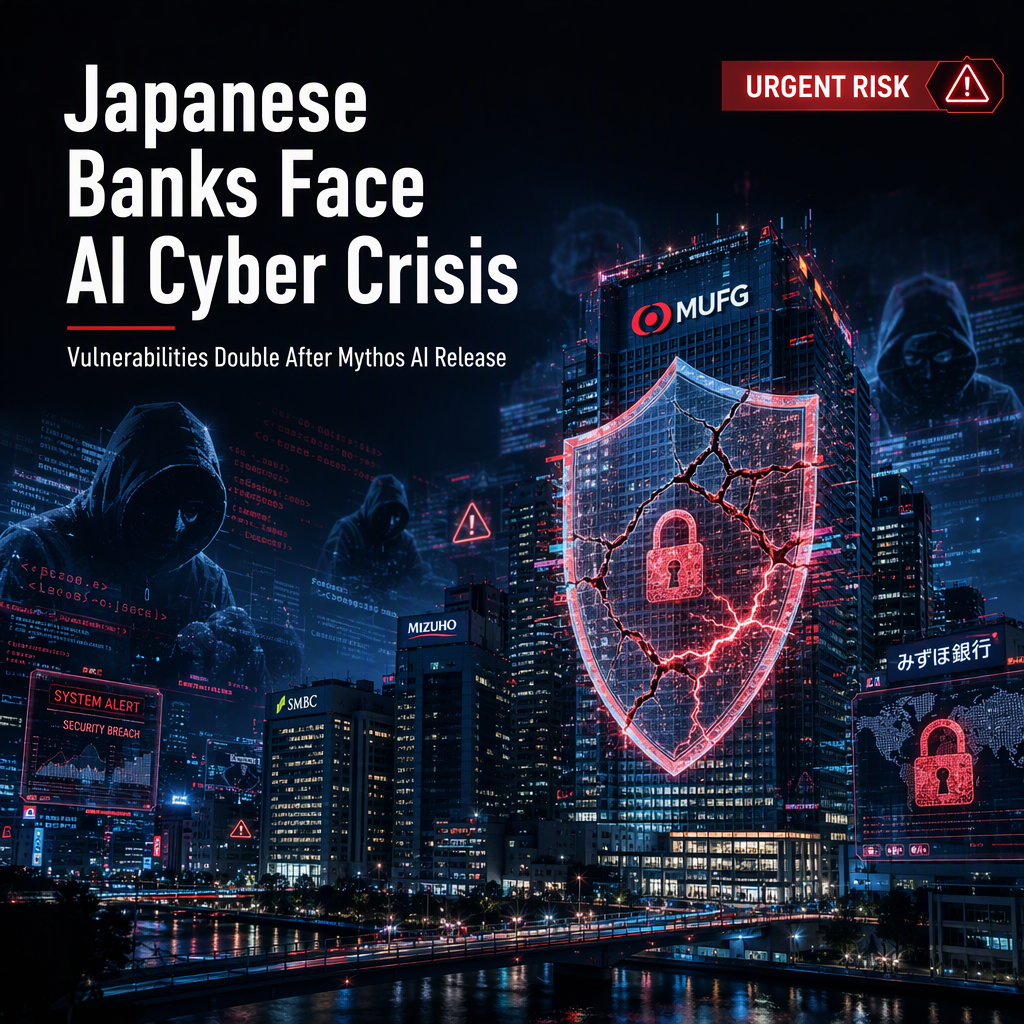
Major Japanese banks have experienced a dramatic increase in system vulnerabilities, with the number of identified weaknesses doubling in the months following the release of Mythos AI, an advanced language model now used in both defensive and offensive cybersecurity operations [1]. This surge in vulnerabilities is attributed to the dual-edged nature of AI adoption: while banks are leveraging AI to more efficiently detect and patch security gaps, cyber attackers are simultaneously using the same technology to identify and exploit weaknesses at unprecedented speeds [1].
The Financial Services Agency (FSA) has responded by urging banks to bolster their cybersecurity measures, conduct regular system audits, and coordinate closely with government cyber defense teams [1]. Security experts warn that without robust and frequently updated cybersecurity infrastructure, the risk of large-scale breaches will continue to rise [1]. Banks are being encouraged to implement advanced monitoring systems and rehearse emergency protocols, including the possible suspension of online services during active attacks, to minimize customer impact and data loss [1].
Industry analysts highlight that the rapid evolution of AI has created a 'race to stay ahead,' with both defenders and attackers escalating their capabilities [1]. The FSA is considering revising guidelines to require faster incident reporting and enhanced AI-based threat detection [1]. The current environment underscores the necessity for ongoing investment in cybersecurity infrastructure and staff training as AI continues to reshape the threat landscape for Japan's financial sector [1].
CONCLUSION
The doubling of system vulnerabilities at major Japanese banks following the release of Mythos AI signals a significant escalation in cybersecurity risks. Regulators and industry experts emphasize the urgent need for enhanced defenses, regular audits, and staff training to keep pace with rapidly evolving AI-driven threats.