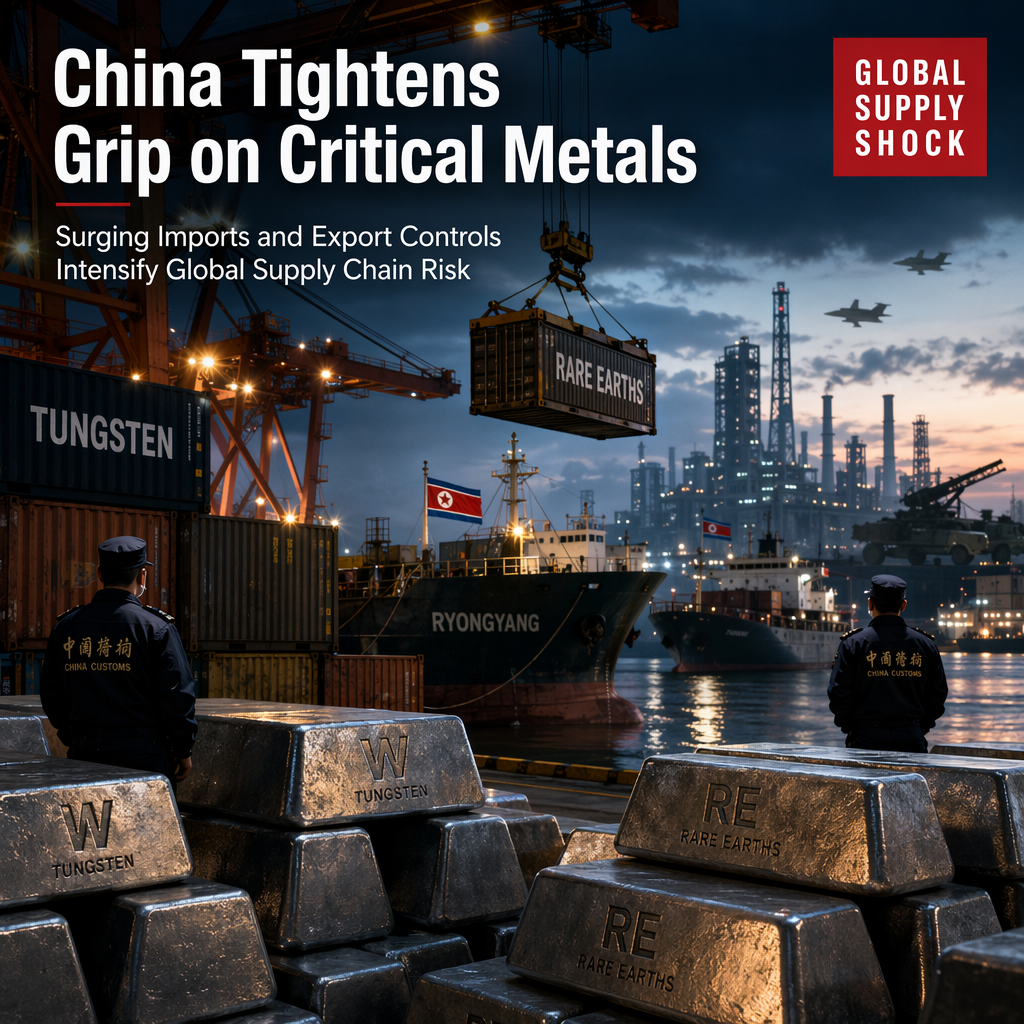
China has significantly increased its imports of critical metals, including tungsten, with a 60% year-on-year surge according to Nikkei's analysis of Chinese customs data [1]. This import boost is part of a dual strategy where China is simultaneously restricting exports, aiming to consolidate its dominance in the global supply chain for strategic metals such as tungsten, rare earths, and other minerals essential for advanced electronics, military hardware, and renewable energy technologies [1]. Notably, China has ramped up purchases from North Korea, which has become a key supplier amid shifting geopolitical dynamics and ongoing trade restrictions elsewhere [1].
Export controls have led to a marked decrease in outbound shipments of tungsten to major markets like Japan, with exports dropping by as much as half in some cases [1]. This tightening of supply has contributed to increased price volatility in the spot market for tungsten and related metals, as traders cite uncertainty over Chinese supply as a major factor [1]. Industry experts warn that China's strategy of stockpiling resources while controlling exports puts downstream manufacturers in other countries at a disadvantage and adds volatility to global prices [1].
In response to China's actions, countries such as Kazakhstan and Vietnam are attempting to ramp up production and establish alternative supply chains, though analysts note that this is a slow process and China retains significant market influence due to its resources and refining capacity [1].
Forward-looking statements from industry observers suggest that, despite efforts to diversify supply, China is likely to remain the dominant force in the critical metals market for the foreseeable future [1].
CONCLUSION
China's aggressive import strategy and export controls on critical metals have heightened global supply chain risks and increased price volatility. While other countries are working to diversify supply, China's market influence remains strong, suggesting continued uncertainty and potential challenges for downstream manufacturers worldwide.