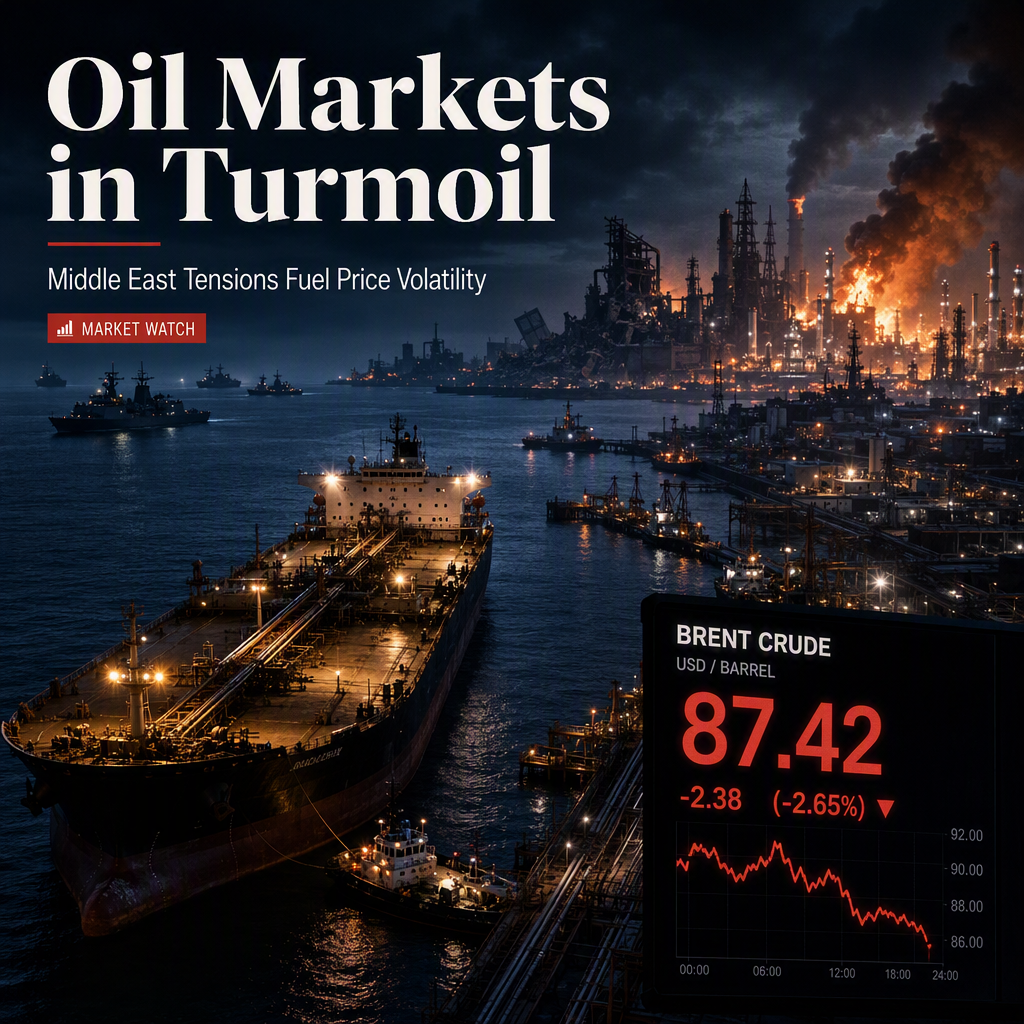
Recent developments in the Middle East have heightened concerns over oil supply disruptions, leading to increased volatility in oil prices. According to ING analysts, Brent crude prices ended largely flat after edging lower during the previous session, as US-Iran talks remain at a deadlock and Russian port infrastructure at Novorossiysk escaped major damage from a recent drone attack [1]. In contrast, CNBC reports that oil prices have risen due to a worsening oil spill near Oman and deadly attacks on vessels in the Gulf of Oman and the Red Sea, which have intensified worries about supply disruptions [2].
The U.S. Energy Information Administration (EIA) reported a significant build in U.S. commercial crude oil inventories, with an increase of 17.42 million barrels over the last week—the largest weekly rise since January 2023. Including 6.12 million barrels of Strategic Petroleum Reserve (SPR) releases, total crude stocks rose by 11.31 million barrels [1]. Meanwhile, Saudi Arabia has increased oil exports through a Mediterranean pipeline to avoid attacks in the Red Sea by Houthi militants [2].
Forecasts for future oil demand and supply diverge between major agencies. The International Energy Agency (IEA) expects the global oil market to face a 1.8 million barrels per day (b/d) deficit in the third quarter of 2026, a figure that has grown due to renewed Middle East disruptions. The IEA also projects global oil demand to fall by 1.6 million b/d year-on-year in 2026, citing Persian Gulf disruptions and elevated fuel prices. In contrast, OPEC remains more optimistic, forecasting global demand to grow by 580,000 b/d year-on-year, a view ING analysts describe as 'fairly optimistic' given current refined product prices [1].
Geopolitical tensions remain high, with Iran pushing back against U.S. President Donald Trump's claims of 'total control' over the Strait of Hormuz. The Persian Gulf Strait Authority stated on X that 'The Strait of Hormuz remains blocked and will not be reopened until Iran's conditions are accepted' [2]. These tensions, along with recent attacks and supply disruptions, have contributed to the current volatility in oil markets [2].
CONCLUSION
Oil markets are experiencing heightened volatility due to escalating Middle East tensions, significant supply disruptions, and sharply diverging demand forecasts from major agencies. While inventory builds in the U.S. suggest short-term bearishness, ongoing geopolitical risks and supply concerns are keeping prices elevated and market sentiment cautious.