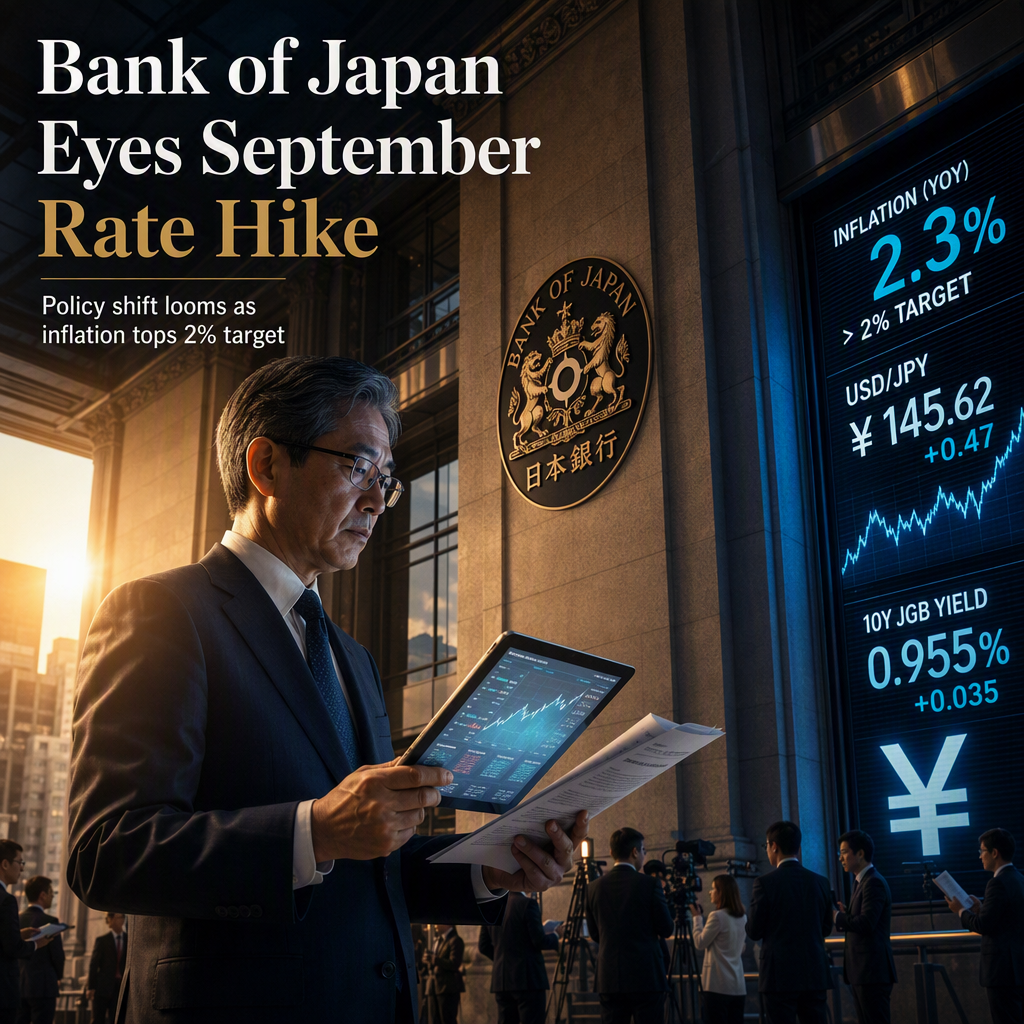
According to Jiji Press, the Bank of Japan (BoJ) may consider an additional interest rate increase at its next policy meeting scheduled for September 17-18, following its decision to leave rates unchanged in July. This potential move is aimed at countering upside inflation risks in Japan [1]. The BoJ's mandate is to ensure price stability, targeting an inflation rate of around 2% [1].
The BoJ has historically pursued an ultra-loose monetary policy since 2013, utilizing Quantitative and Qualitative Easing (QQE) and asset purchases to stimulate the economy. In 2016, the central bank introduced negative interest rates and began controlling the yield of its 10-year government bonds. However, in March 2024, the BoJ lifted interest rates, signaling a retreat from its previous ultra-loose stance [1].
The prolonged stimulus measures contributed to a depreciation of the Yen against major currencies, especially as other central banks raised rates to combat high inflation in 2022 and 2023. This policy divergence widened the gap between the Yen and other currencies, but the trend began to reverse in 2024 when the BoJ shifted its policy [1].
Japanese inflation has exceeded the BoJ's 2% target, driven by a weaker Yen, rising global energy prices, and the prospect of increasing salaries, all of which have contributed to inflationary pressures. The possibility of a rate hike in September reflects the BoJ's ongoing efforts to address these risks [1].
CONCLUSION
The Bank of Japan is considering a rate hike in September to address persistent inflationary pressures, marking a continued shift away from its ultra-loose monetary policy. This potential move could impact currency markets and investor sentiment, given the central bank's influence on the Yen and broader Japanese economic conditions. Market participants will closely watch the September policy meeting for further signals on the BoJ's direction.