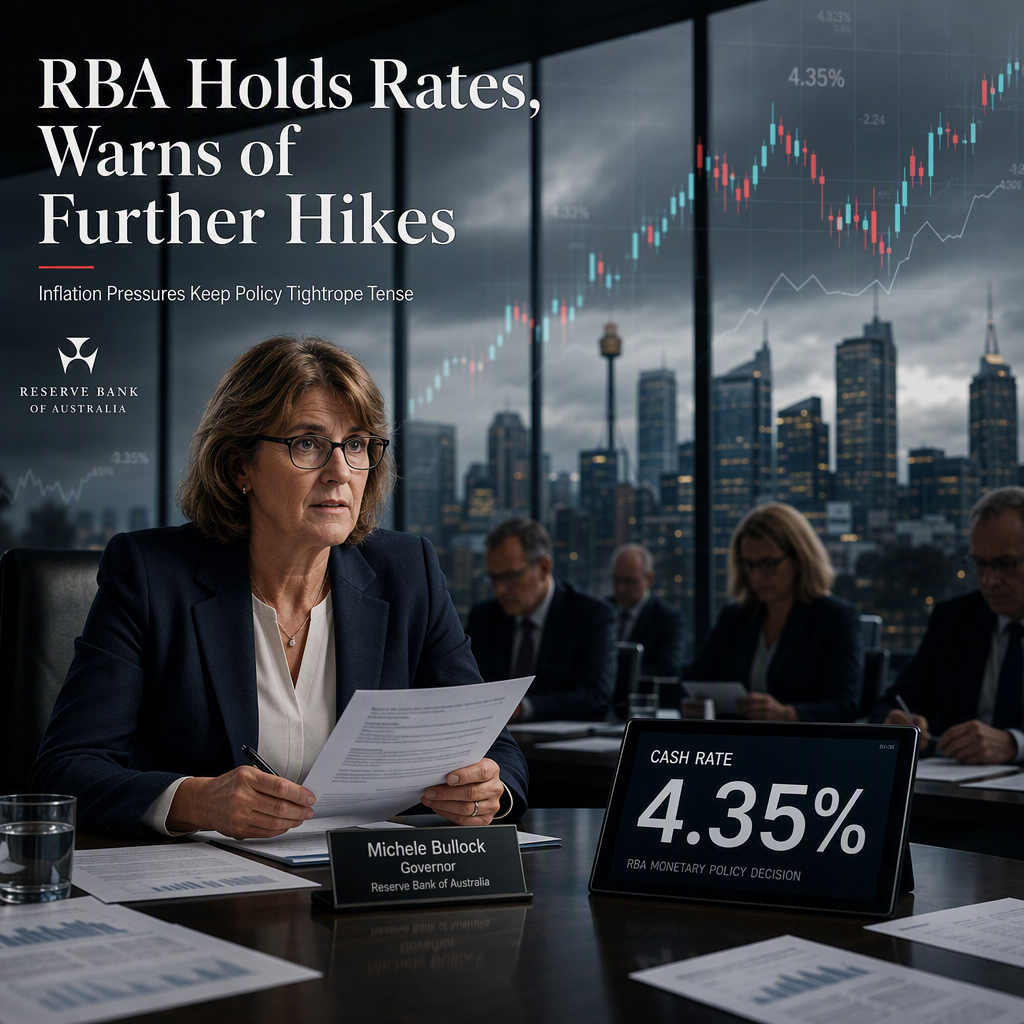
The Reserve Bank of Australia (RBA) decided to keep its cash rate unchanged at 4.35% in a unanimous decision, aligning with market expectations, according to Standard Chartered’s Nicholas Chia [1]. The RBA emphasized that inflation remains above comfortable levels, citing ongoing capacity pressures and an additional inflation impulse from higher fuel prices [1]. The central bank projects that inflation will only return to the midpoint of its 2–3% target range by late 2027 [1].
Governor Bullock highlighted the uncertainty surrounding the RBA’s central forecasts and did not rule out the possibility of further policy tightening in the near term if upside inflation risks materialize [1]. While Standard Chartered’s base case anticipates no further rate hikes in the foreseeable future, the risk is skewed toward an additional increase in the fourth quarter should demand remain robust or energy prices rise again, intensifying capacity and price pressures [1].
The RBA also noted the impact of tighter financial conditions on economic activity, observing that the labor market and housing prices have eased, with tentative signs of slowing consumer spending growth [1]. Standard Chartered believes that sustained easing in labor-market conditions should help contain underlying wage and price pressures in the economy [1].
CONCLUSION
The RBA’s decision to hold rates steady reflects ongoing concerns about persistent inflation and economic uncertainty. While no immediate rate hikes are expected, the central bank has left the door open for further tightening if inflationary pressures persist, particularly from strong demand or rising energy prices. Market participants should remain alert to evolving economic data and RBA communications.