
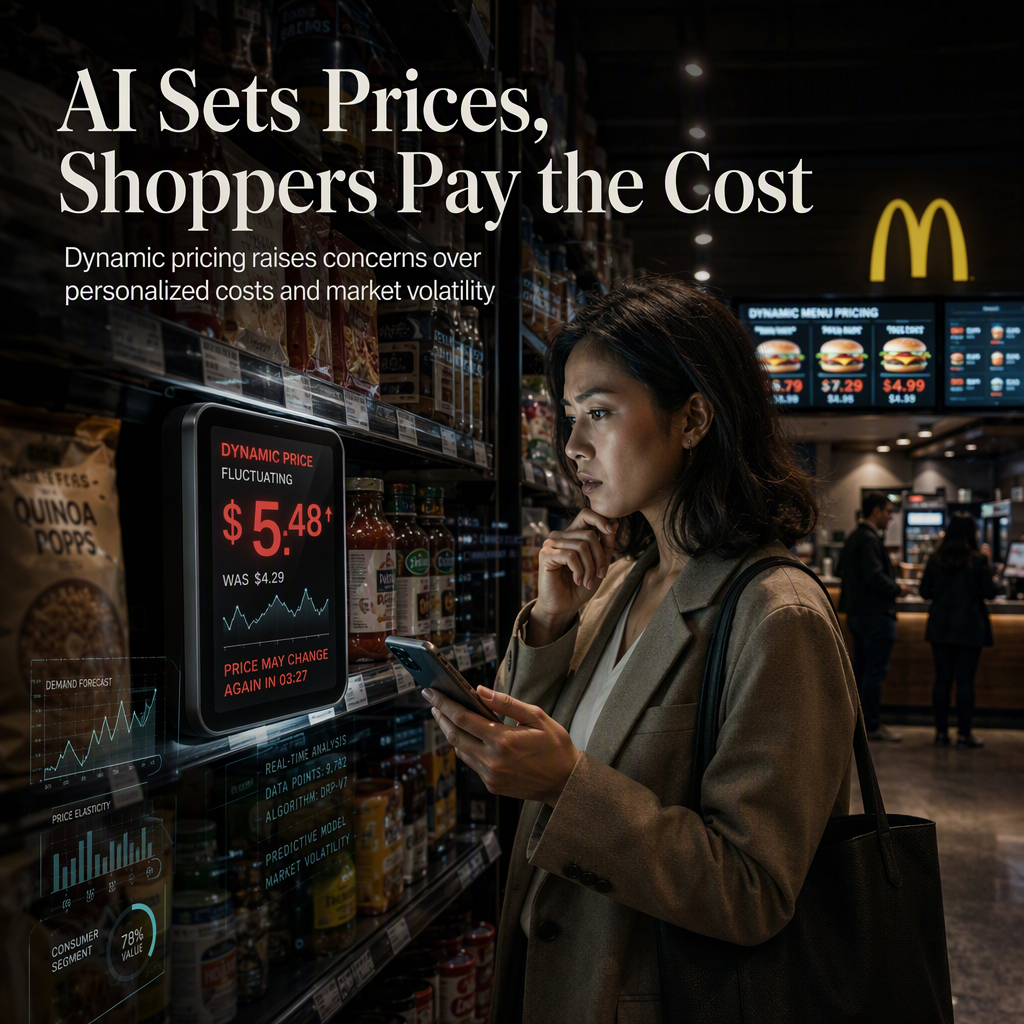
Supermarkets and fast food giants are increasingly adopting artificial intelligence to digitize their operations, with a particular focus on dynamic pricing strategies that could significantly impact shoppers' experiences [1]. Experts warn that the proliferation of data-driven tools may enable more personalized pricing, raising concerns about individualized costs for consumers [1]. This week, a federal antitrust lawsuit was filed against McDonald's, alleging the company uses an AI-powered 'pricing engine' to set menu prices across U.S. locations and overcharge customers for items such as Big Macs and fries. McDonald's has denied using AI to determine what individual customers are willing to pay, stating it only provides franchisees with tools, resources, research, and recommendations to inform their pricing decisions [1].
The trend extends beyond fast food, as grocery chains like Kroger have implemented AI platforms such as FlashFood to mark down perishables nearing expiration and market them to shoppers via an app [1]. Electronic shelf labels (ESLs), which display prices on digital screens, are becoming increasingly popular at supermarkets including Kroger, Amazon Fresh, Walmart, and Whole Foods, as well as U.K. chains like Tesco, Morrisons, and Asda [1]. Additionally, Revolut has recently trialed facial recognition checkout in select coffee shops, allowing customers to pay with a glance [1].
Experts caution that as AI becomes normalized among retailers, dynamic pricing—frequent, real-time changes in prices—could become more widespread, potentially leading to 'perfect price discrimination,' where firms charge the maximum price a consumer is willing to pay [1]. Bank of England economists Clare Lombardelli and Rupal Patel noted in April that more sophisticated technology is causing prices to change more frequently and become more individualized, which could complicate the measurement and interpretation of inflation data [1].
Miroslava Marinova, a senior lecturer of commercial law at the University of East London, explained that dynamic pricing responds to changing market conditions such as demand, timing, capacity, or competitors' prices, and while not new, its application in food retail is expanding rapidly due to AI [1].
CONCLUSION
The increasing use of AI-driven dynamic pricing in supermarkets and fast food chains is raising concerns about more individualized costs for shoppers and potential challenges in tracking inflation. While companies like McDonald's deny using AI for personalized pricing, the broader adoption of these technologies suggests market conditions may become more volatile for consumers. The market impact is medium, as these developments could influence both consumer behavior and regulatory scrutiny.