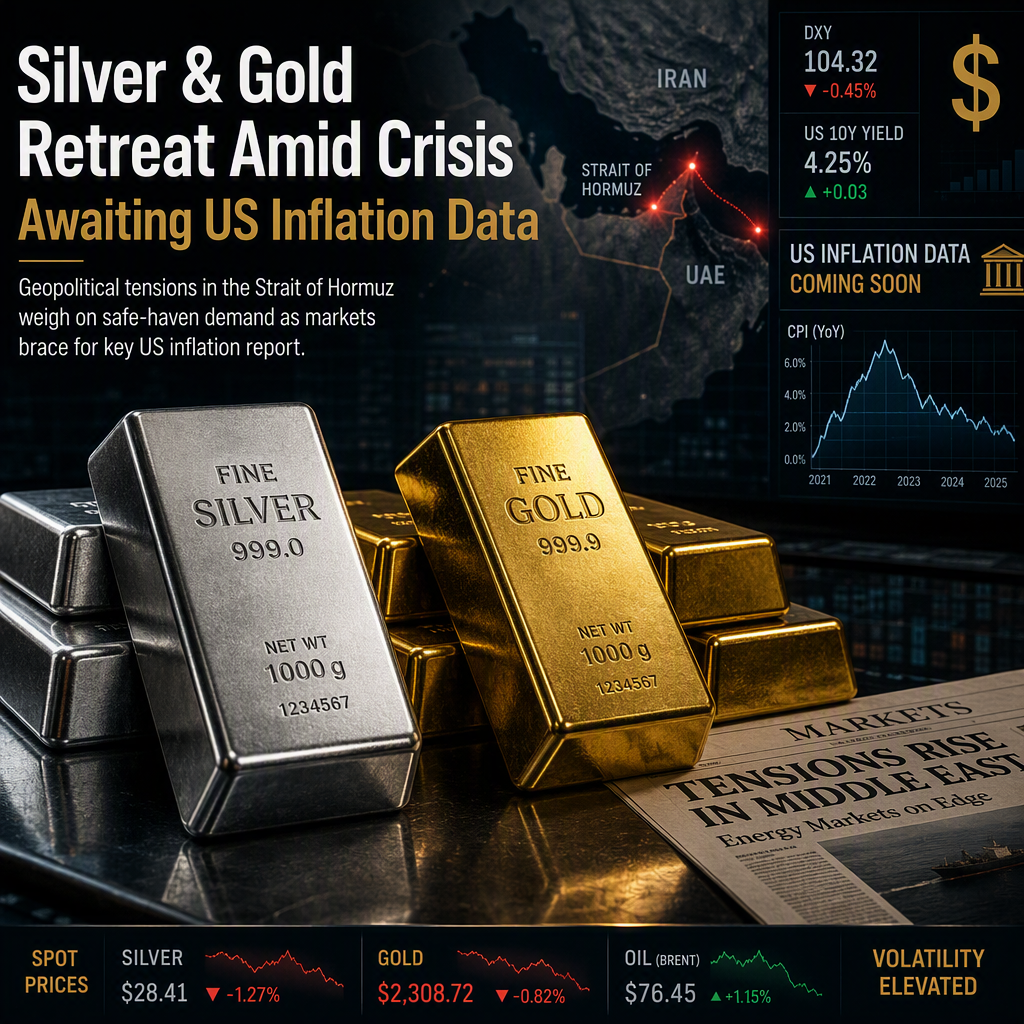
On Tuesday, both silver (XAG/USD) and gold (XAU/USD) prices experienced declines, influenced by a combination of geopolitical tensions and anticipation of key US economic data releases. Silver reversed course, dropping approximately 2.70% to trade at $64.77 after reaching a daily high of $66.49, despite steady US Treasury yields and a stable US Dollar. The pullback in silver occurred amid reports that the Strait of Hormuz would remain closed unless the US complies with Iran’s demands, raising concerns over potential disruptions in global trade routes [1].
From a technical perspective, silver remains neutral to upward-biased after reclaiming the 50-day Simple Moving Average (SMA), but the prevailing market structure of lower highs and lower lows persists. A bullish continuation would require XAG/USD to surpass the 100-day SMA at $68.93, with further resistance at the $70.00 psychological level and the June 16 high of $71.19. Conversely, a retreat below the August 10 daily low of $63.28 could trigger a deeper pullback, targeting the 50-day SMA at $61.76 and the $60.00 level [1].
Gold prices also registered modest losses, with XAU/USD trading at $4,381, down 0.18% after hitting a daily high of $4,435. The decline was attributed to a firm US Dollar and rising energy prices, which capped gold’s advance. Market participants are closely watching the upcoming release of the US Consumer Price Index (CPI), with analysts expecting July's headline inflation to be 3.4% year-over-year, a tenth lower than June, and core CPI projected to decrease to 2.5% year-over-year. The US Producer Price Index (PPI) and jobless claims are also scheduled for release following the CPI data [2].
Additional economic data showed a deceleration in the US labor market, with the ADP Employment Change 4-week average at 8.25K jobs created, and Existing Home Sales falling by 1.7% in July. Mortgage rates have risen by over 71 basis points since the onset of the US-Iran conflict, now standing at 6.69%. Chicago Fed President Austan Goolsbee emphasized that inflation remains the primary concern for the US economy, stating, “prices have been rising too fast, we have an inflation problem, and people hate inflation.” Money markets are currently pricing in a 52% probability of a 25-basis-point Fed rate hike in September [2].
Geopolitical risks remain elevated, with the Secretary of the Supreme National Security Council of Iran reiterating that the Strait of Hormuz will not reopen until the US changes its behavior and accepts Tehran’s conditions. This ongoing uncertainty is contributing to cautious trading in both precious metals [1][2].
CONCLUSION
Both silver and gold prices have retreated amid heightened geopolitical tensions surrounding the Strait of Hormuz and ahead of key US inflation data releases. While technical indicators suggest potential for consolidation or further pullbacks, market participants remain focused on upcoming economic reports and central bank policy signals. The ongoing standoff in the Middle East and persistent inflation concerns are likely to keep volatility elevated in the precious metals markets.