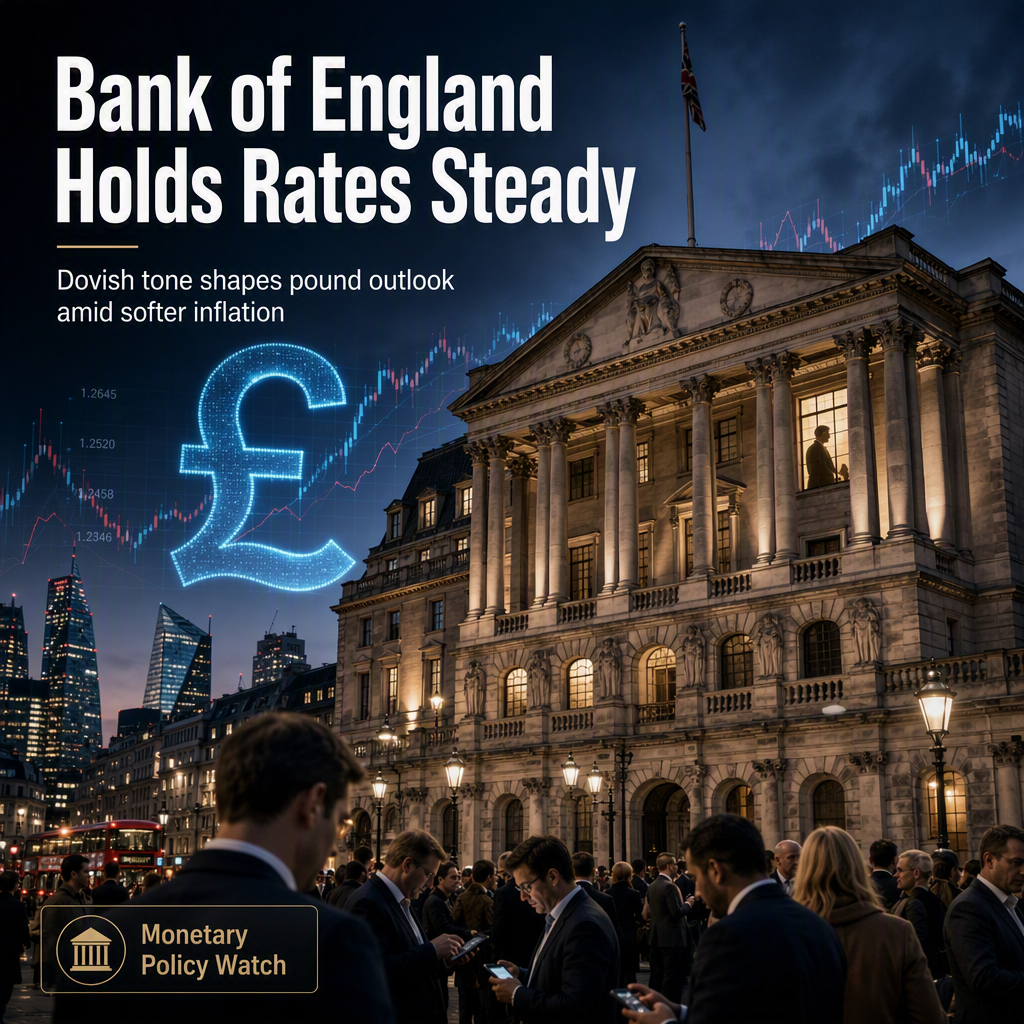
The Bank of England (BoE) decided to keep its policy rate unchanged at 3.75%, with Governor Andrew Bailey emphasizing that the committee is not moving closer to a rate hike, despite ongoing risks related to the US-Iran conflict [1]. The Monetary Policy Committee (MPC) acknowledged that inflationary risks remain, particularly if the geopolitical situation escalates, but noted that recent price pressures have been softer than anticipated [1].
The BoE reiterated its guidance that it 'stands ready to act' should inflation remain persistently elevated, signaling a willingness to adjust policy if necessary [1]. However, the softer inflation data prompted markets to scale back expectations for a rate increase at the September meeting [1].
The MPC vote reflected a split, with Catherine Mann, Megan Greene, and Chief Economist Huw Pill supporting a 25 basis point rate hike, while the remaining six members, including Governor Bailey, favored holding rates steady due to the subdued inflation outlook [1]. This dovish stance has tempered market bets on near-term tightening and influenced the outlook for the British Pound [1].
CONCLUSION
The Bank of England's decision to hold rates at 3.75% and its dovish messaging have led markets to reduce expectations for a September rate hike. The central bank remains vigilant but is currently prioritizing softer inflation data over geopolitical risks, shaping a more cautious outlook for UK monetary policy.