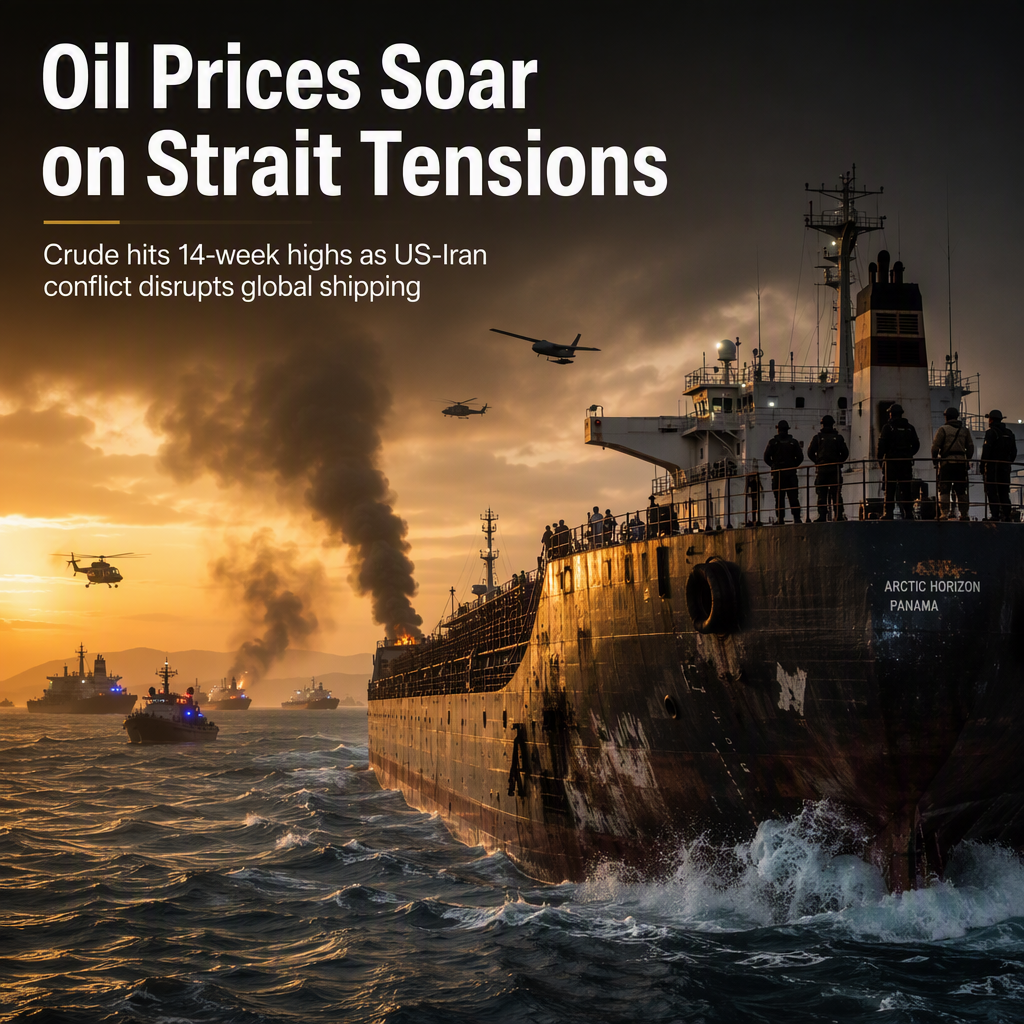
West Texas Intermediate (WTI) crude oil settled just above $94.00, marking a gain of over 2% and reaching its highest level since May 22, as escalating tensions between the United States and Iran led to a series of attacks on oil tankers near the Strait of Hormuz and the Gulf of Oman [1]. According to Iran's Revolutionary Guards, they fired on two American vessels and eight tankers, while US Central Command reported destroying five Iranian tankers, bringing the American tally to eight since Saturday. The Revolutionary Guards claimed a total of ten vessels targeted, highlighting discrepancies in the reported numbers [1].
Britain's maritime security agency noted several merchant ships were disabled on both sides of the strait, with incidents including a vessel listing off Port Rashid and a gas carrier damaged at Khor Fakkan [1]. Tehran announced plans for a wider exclusion zone extending to the Arabian Sea off Chabahar and declared a retaliatory policy: for every three Iranian targets struck, twenty would be answered in kind. Crews were reportedly warned to evacuate before strikes occurred [1].
The conflict has significantly increased war-risk insurance premiums for transiting the Strait of Hormuz, with rates rising to 7.5%-12.5% of hull value compared to 0.25% before the hostilities. Some underwriters have reduced capacity or stopped quoting altogether, leading to a surge in freight rates. For example, a supertanker on the Middle East Gulf to China route earned just under $704,000 per day last week, compared to just over $196,000 for the US Gulf to China route [1].
Iraq's Basrah oil exports, which had dropped to about 1.35 million barrels per day in July, recovered to approximately 2.35 million in August after certain tankers were cleared to transit, but volumes remain below pre-war levels. The number of commodity vessel transits through the strait has fallen to the lowest since May, coinciding with the last time crude oil traded at these levels [1].
Abu Dhabi's Murban crude, which loads outside the Strait of Hormuz, has been quoted at over a $30.00 premium to Dubai for East Asian delivery, at least $10.00 more than the delivered cost of WTI from the US Gulf. Asian refiners have responded by increasing purchases of American crude, with over 40 million barrels scheduled for September loading compared to 22 million in August. Meanwhile, American refiners are operating near record rates, and pump prices are at a seasonal record high [1].
CONCLUSION
Crude oil prices have surged to 14-week highs as US-Iran tensions disrupt tanker traffic and raise shipping costs. The market is reacting to increased risk premiums and shifting trade flows, with Asian buyers turning to US crude amid regional instability. The ongoing conflict and elevated freight rates suggest continued volatility in oil markets.