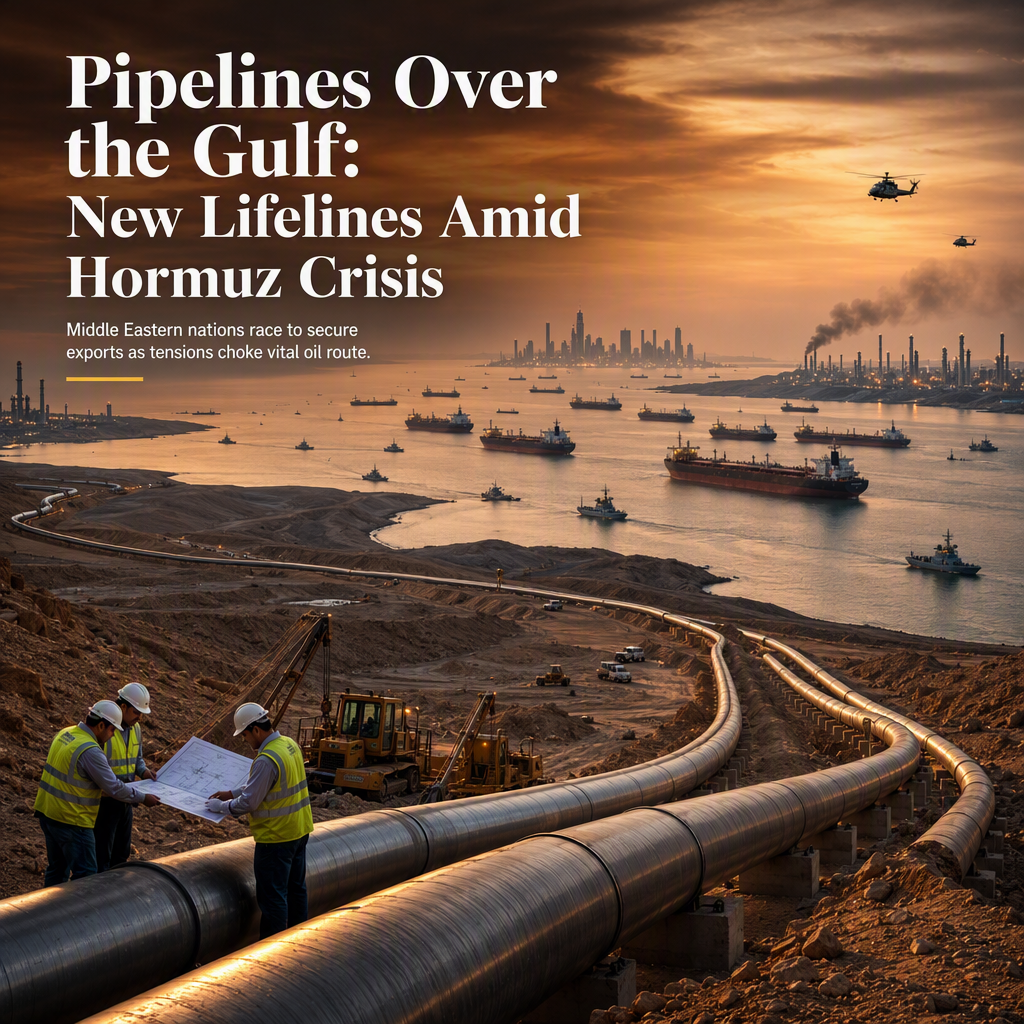
The ongoing closure of the Strait of Hormuz, a critical chokepoint for global oil shipments, has prompted Middle Eastern oil-producing nations to accelerate efforts to develop alternative pipeline routes for crude exports. Geopolitical tensions, particularly the Iran war, have heightened risks for oil transit through Hormuz, resulting in increased market volatility and a renewed focus on infrastructure investment to ensure stable export flows [1].
Saudi Arabia and the United Arab Emirates, which already possess some alternative pipelines, are seeking to expand these routes further. Japan is preparing to support these efforts by aiding the development of new and expanded pipelines that bypass the strait, aiming to maintain reliable oil supplies [1].
Iraq is working to refurbish a pipeline connection to Syria with assistance from the United States, in an effort to diversify its export routes and reduce reliance on vulnerable maritime passages. However, the region's political and security challenges pose significant obstacles to the completion and operation of such projects [1].
Kuwait and Qatar face greater difficulties in finding bypass routes due to their geographic positions, leaving them with fewer immediate options. This situation has raised concerns among market participants about the long-term stability of oil shipments from these countries, contributing to ongoing volatility in global oil prices and increased insurance premiums for tankers operating in the region [1].
Financial analysts report that global oil inventories are declining again amid the Hormuz stalemate, reinforcing upward pressure on prices. The market is closely monitoring developments in pipeline infrastructure and regional security, as any disruption or progress could significantly impact supply dynamics and price levels. Additionally, Japan is considering state reinsurance for tankers to help mitigate elevated risks for shippers and maintain stability in supply chains [1].
CONCLUSION
The closure of the Strait of Hormuz has intensified efforts by Middle Eastern oil producers to secure alternative export routes, with significant support from Japan and the United States. Persistent regional instability and limited options for some countries are fueling market volatility and upward pressure on oil prices, making infrastructure developments and security measures critical for future supply stability.