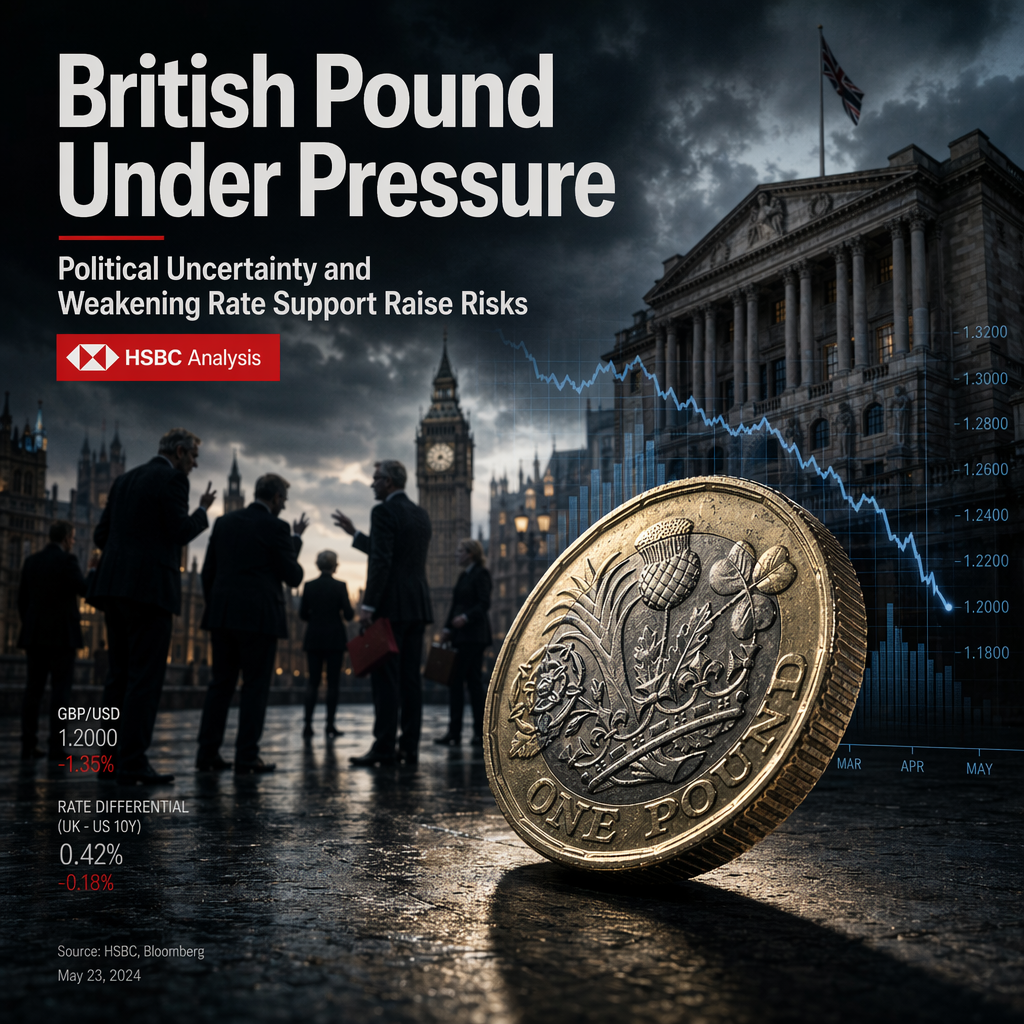
HSBC has highlighted increased downside risks for the British Pound following the resignation of Prime Minister Starmer and the subsequent UK leadership contest, which has shifted market focus to political uncertainty and the policy direction of the next Prime Minister. The bank notes that candidates for the leadership must declare by 9 July, and if the favorite, Andy Burnham, remains unchallenged, a swift transition could see him in office by 16 July [1].
Beyond the political developments, HSBC points to a less supportive macroeconomic backdrop for the Pound. The UK–US 2-year rate differentials have narrowed sharply from approximately 66 basis points in April to nearly zero, reducing the carry support that previously underpinned the GBP. This change is attributed to the US Federal Reserve's hawkish shift on 17 June, contrasted with the Bank of England's cautious stance, as the BoE is expected to hold rates at 3.75% through year-end according to HSBC economists [1].
Additionally, fiscal conditions have worsened, with UK government borrowing exceeding the Office for Budget Responsibility’s forecast for a second consecutive month. HSBC concludes that these political and macroeconomic headwinds are likely to weigh on the GBP in the coming months, leaving the currency more exposed to downside risks [1].
CONCLUSION
HSBC sees the British Pound as vulnerable due to ongoing UK leadership uncertainty, narrowing rate differentials, and deteriorating fiscal conditions. The combination of political and macroeconomic headwinds is expected to weigh on GBP performance in the months ahead.