
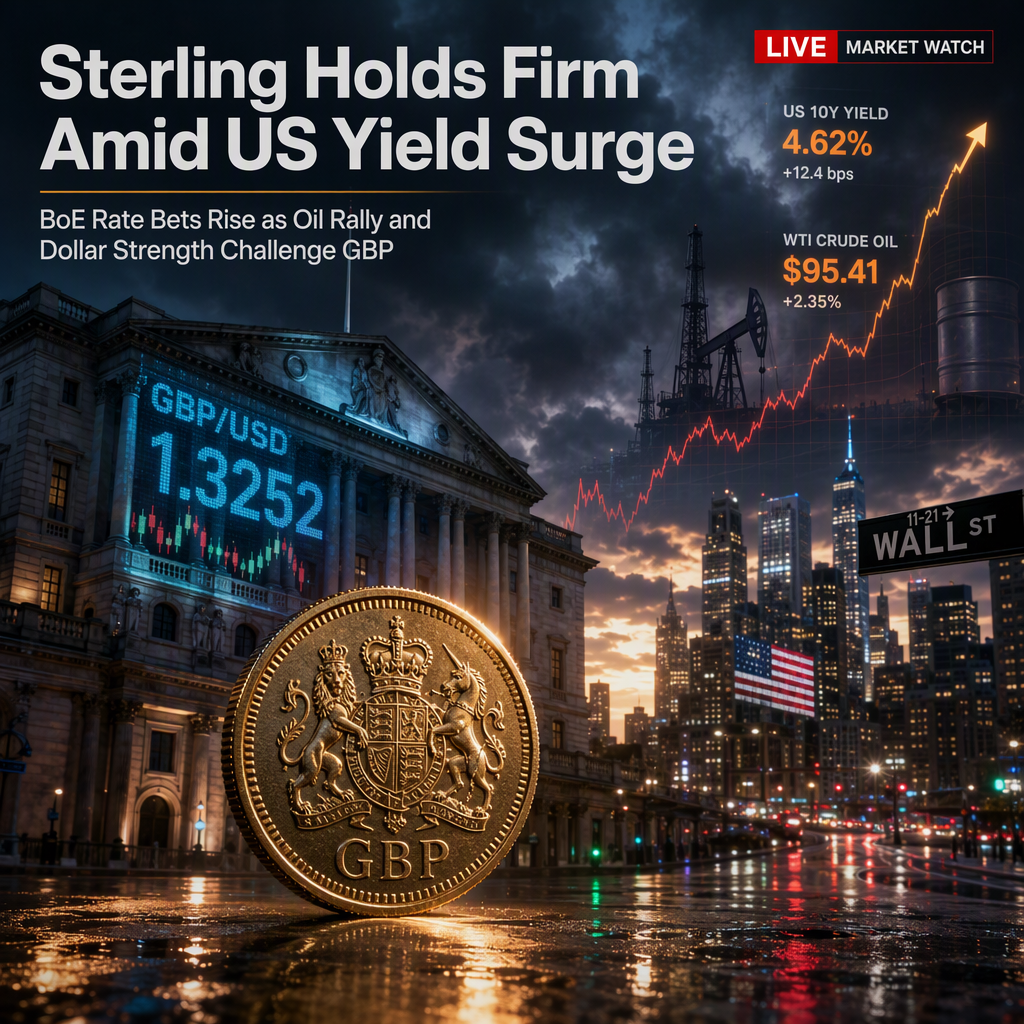
The British Pound registered modest gains of 0.18%, trading at 1.3252, despite a surge in US Treasury yields and a strengthening US Dollar, with the US 10-year note rising over 10 basis points to as high as 5.261% [1]. The US Dollar Index (DXY) climbed 0.15% to 101.18, near a three-day high, as oil prices rose sharply; West Texas Intermediate (WTI) was up more than 3% at $95.41 per barrel [1]. The rise in oil prices followed US President Donald Trump's rejection of Iran's proposal to reopen the Strait of Hormuz, with warnings that attacks could resume after the US midterm elections [1][3].
Sterling's resilience was attributed to revived expectations for Bank of England (BoE) tightening, as UK energy price shocks prompted speculation that the BoE may need to raise rates further. BoE Governor Bailey stated that high energy prices would require the bank to work harder to keep interest rates unchanged, while Deputy Governor Dave Ramsden indicated that upside inflation pressures could justify rate hikes [1]. Rabobank reported that GBP net short positions have increased by more than 40%, reaching their highest level since August, reflecting negative speculative sentiment toward the Pound [2]. The BoE kept the Bank Rate unchanged at 3.75% at its September 18 meeting, in line with market expectations [2].
Technical analysis shows GBP/USD trading at 1.3255 with a bearish near-term bias, as the pair remains below key moving averages and trend-line resistance levels. The 50/100/200-day simple moving average pack converges near 1.3462, acting as overhead resistance, while broken trend lines around 1.3528 and 1.3732 reinforce a market capped beneath former structural floors. The Relative Strength Index (14) is about 30, suggesting the pair is oversold [1].
Market participants are closely watching upcoming events, including the UK Autumn Budget scheduled for October 28 and a speech by UK finance minister John Healey at the Labour Party's annual conference on Monday [1]. Meanwhile, the broader market context is shaped by expectations of further Federal Reserve rate hikes, with markets pricing in a 70% chance of another hike in October after the Fed raised rates by 25 basis points at its September 15–16 meeting [3].
According to [1], the energy shock in the UK is reviving BoE tightening expectations, while [2] highlights increased speculative shorts on GBP. However, [3] focuses on the US Dollar's strength and Fed rate hike bets, noting that elevated oil prices and US-Iran tensions are supporting the Greenback and weighing on other currencies, including GBP.
CONCLUSION
The British Pound has shown resilience amid a surge in US yields and oil prices, supported by expectations of further Bank of England tightening. However, increased speculative short positions and a stronger US Dollar signal ongoing headwinds for GBP. The market remains cautious, awaiting key UK fiscal events and further US economic data releases.